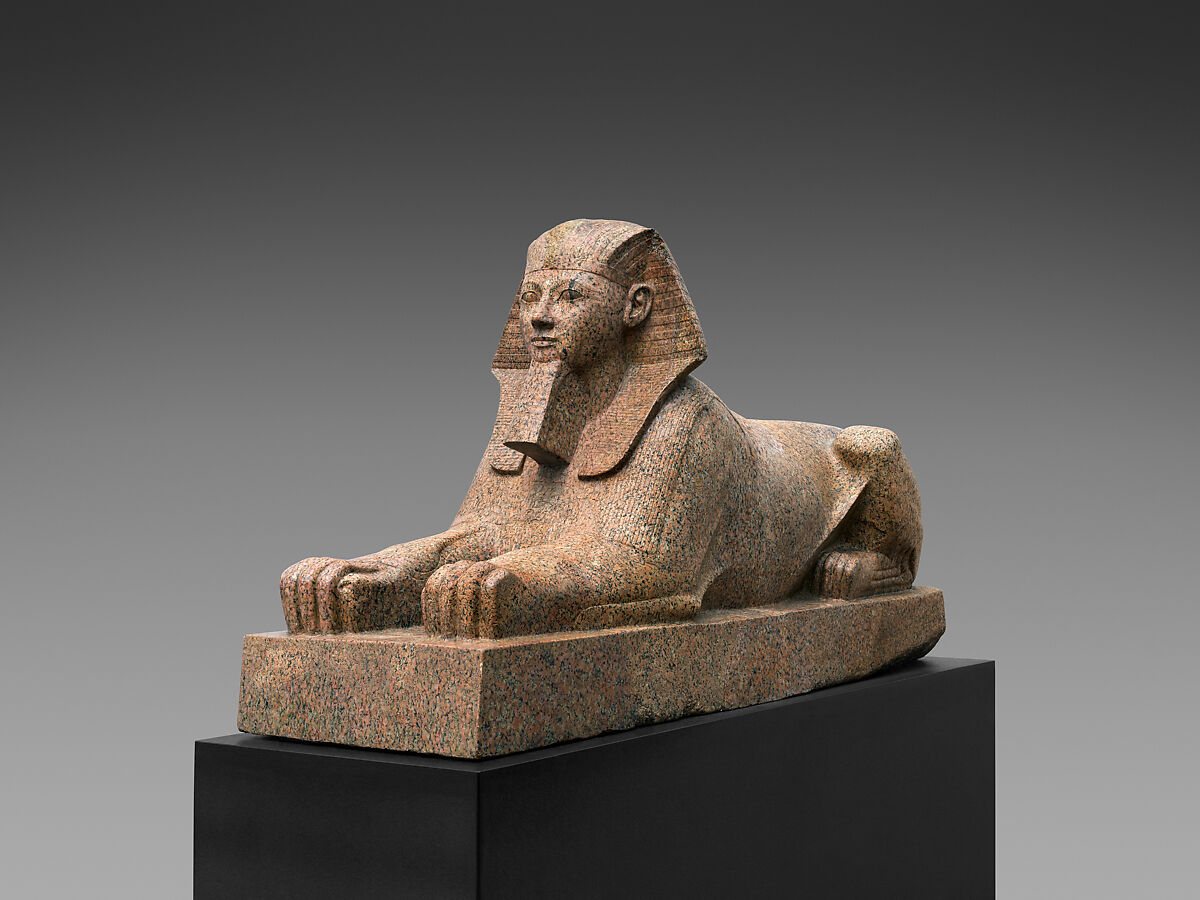
Image: public domain, courtesy of The Metropolitan Museum of Art, New York
Sphinx of Hatshepsut
This sphinx has the body of a lion and the face of Hatshepsut, a woman who ruled Egypt as pharaoh. It was smashed in ancient times, and archaeologists rebuilt it from thousands of pieces, just like a puzzle.
🎧 Audio guide available in the 3D museum
Did you know?
- It was one of at least six granite sphinxes that stood at Hatshepsut’s temple at Deir el-Bahri, near Thebes.
- It weighs about 6.7 tonnes and is about 3.4 metres long.
- Look for the royal striped headcloth and the false beard, signs of a pharaoh, even though Hatshepsut was a woman.
- Look at the tail curled around a back leg: it is a bull’s tail, part of a pharaoh’s royal dress.
- After her death, King Thutmose III had her statues taken down and broken, and the pieces were dumped in a quarry.
- The Met’s own archaeologists dug the pieces out of that quarry in 1926–28.
About this culture
Ancient Egyptian art flourished along the Nile for about three thousand years, from around 3100 BC until Egypt became part of the Roman Empire in 30 BC.
It is famous for pyramids and temples, majestic statues of pharaohs and sphinxes, and colorful tomb paintings of everyday life.
The artists rarely signed their work, yet they cherished small joys too, like the little blue faience hippo that visitors to the Met fondly call “William”.
More works
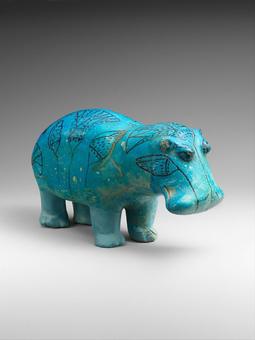 Hippopotamus (William)
Ancient Egypt, c. 1961–1878 BC
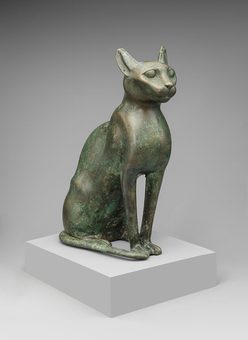 Cat Statuette intended to contain a mummified cat
Ancient Egypt, 332–30 BC
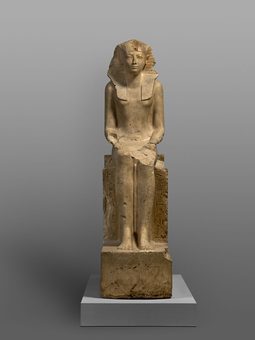 Seated Statue of Hatshepsut
Ancient Egypt, c. 1479–1458 BC
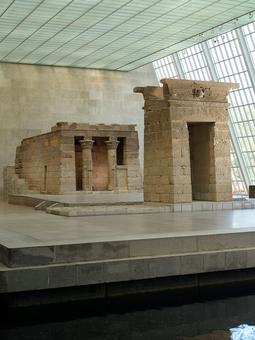 The Temple of Dendur
Ancient Egypt (Roman period), c. 15 BC
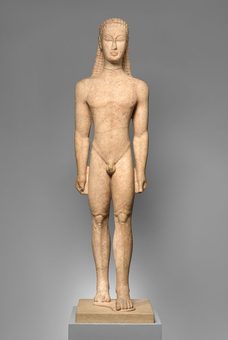 Marble statue of a kouros (youth)
Ancient Greece, c. 590–580 BC
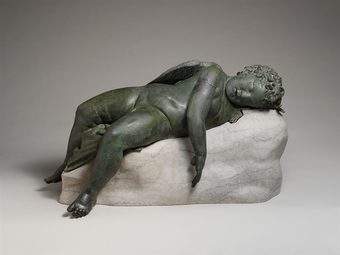 Bronze statue of Eros sleeping
Ancient Greece, 3rd–2nd century BC
The museum is free for everyone. If you enjoy it, you can help us add new paintings and audio guides.
Secure payment via PayPal · any amount