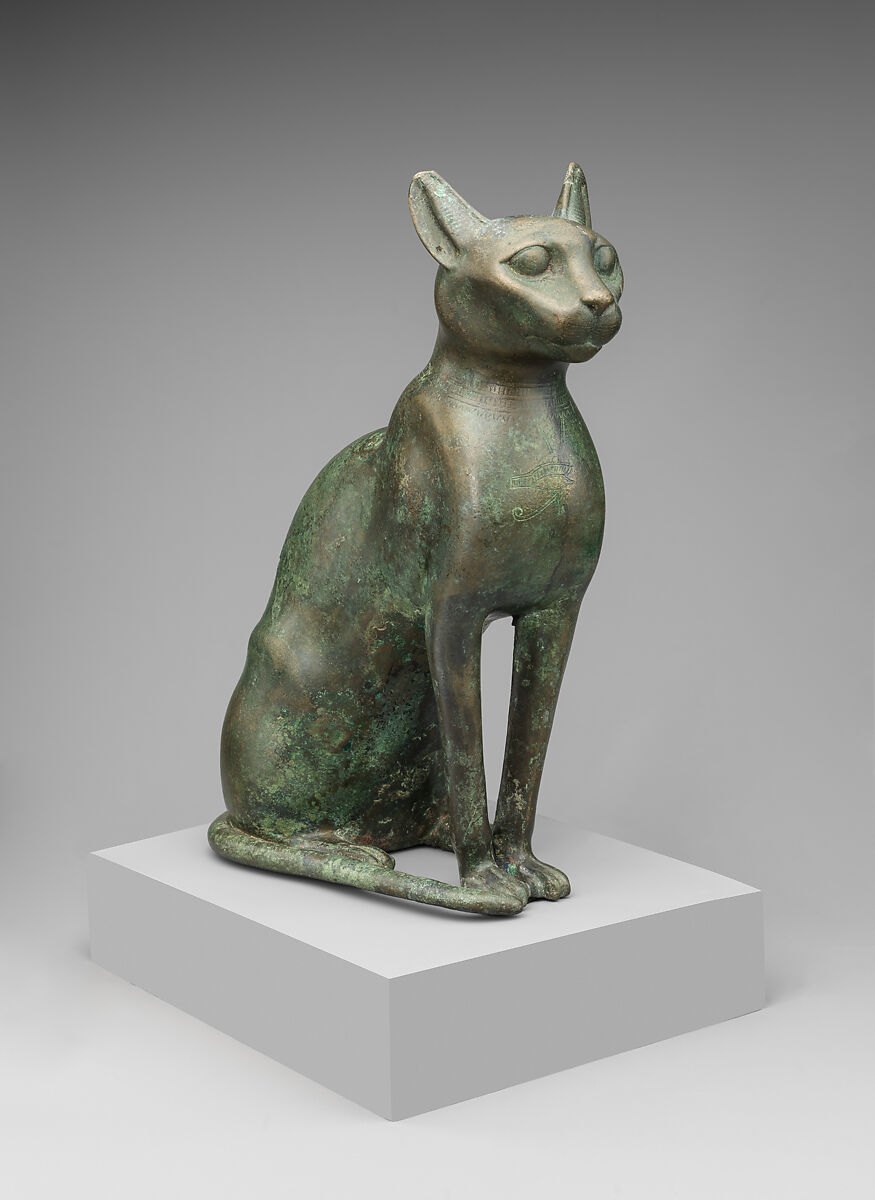
Image: public domain, courtesy of The Metropolitan Museum of Art, New York
Cat Statuette intended to contain a mummified cat
A slender bronze cat sits upright with alert eyes, and on its neck you can see an engraved necklace with a small eye-shaped pendant. This elegant cat was made as a case for a real mummified cat, a gift offered to the kind goddess Bastet.
🎧 Audio guide available in the 3D museum
Did you know?
- For the ancient Egyptians the cat was the sacred animal of Bastet, a kind goddess who protected the home.
- Bastet was seen as the gentle partner of Sekhmet, a fierce goddess shown as a lioness.
- Pilgrims offered mummified cats at Bastet's temples, sometimes inside bronze or wooden cases like this one.
- Bastet's most important temple was at Bubastis in the Nile Delta, and huge cat cemeteries were found there and at Saqqara.
- The eye-shaped pendant on the necklace is a wedjat eye, an Egyptian sign of protection.
- The cat's right ear is pierced: it once wore a little gold ring, as other precious bronze cats of Egypt did.
About this culture
Ancient Egyptian art flourished along the Nile for about three thousand years, from around 3100 BC until Egypt became part of the Roman Empire in 30 BC.
It is famous for pyramids and temples, majestic statues of pharaohs and sphinxes, and colorful tomb paintings of everyday life.
The artists rarely signed their work, yet they cherished small joys too, like the little blue faience hippo that visitors to the Met fondly call “William”.
More works
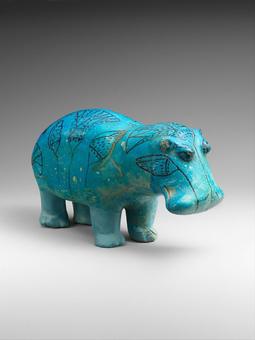 Hippopotamus (William)
Ancient Egypt, c. 1961–1878 BC
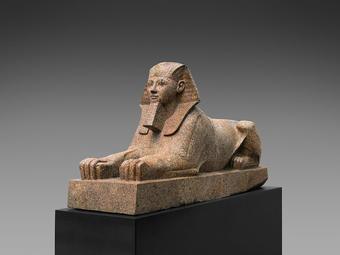 Sphinx of Hatshepsut
Ancient Egypt, c. 1473–1458 BC
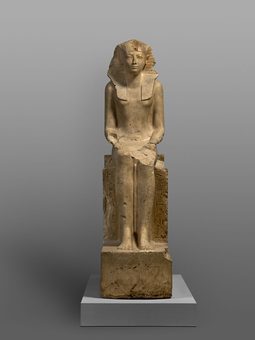 Seated Statue of Hatshepsut
Ancient Egypt, c. 1479–1458 BC
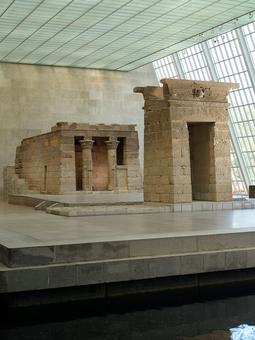 The Temple of Dendur
Ancient Egypt (Roman period), c. 15 BC
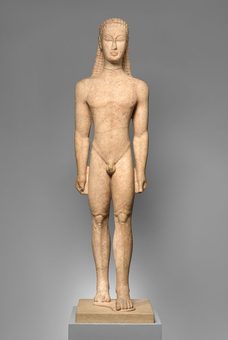 Marble statue of a kouros (youth)
Ancient Greece, c. 590–580 BC
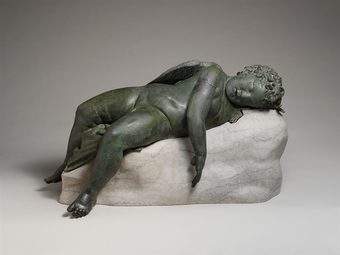 Bronze statue of Eros sleeping
Ancient Greece, 3rd–2nd century BC
The museum is free for everyone. If you enjoy it, you can help us add new paintings and audio guides.
Secure payment via PayPal · any amount