Image: public domain, courtesy of The Metropolitan Museum of Art, New York
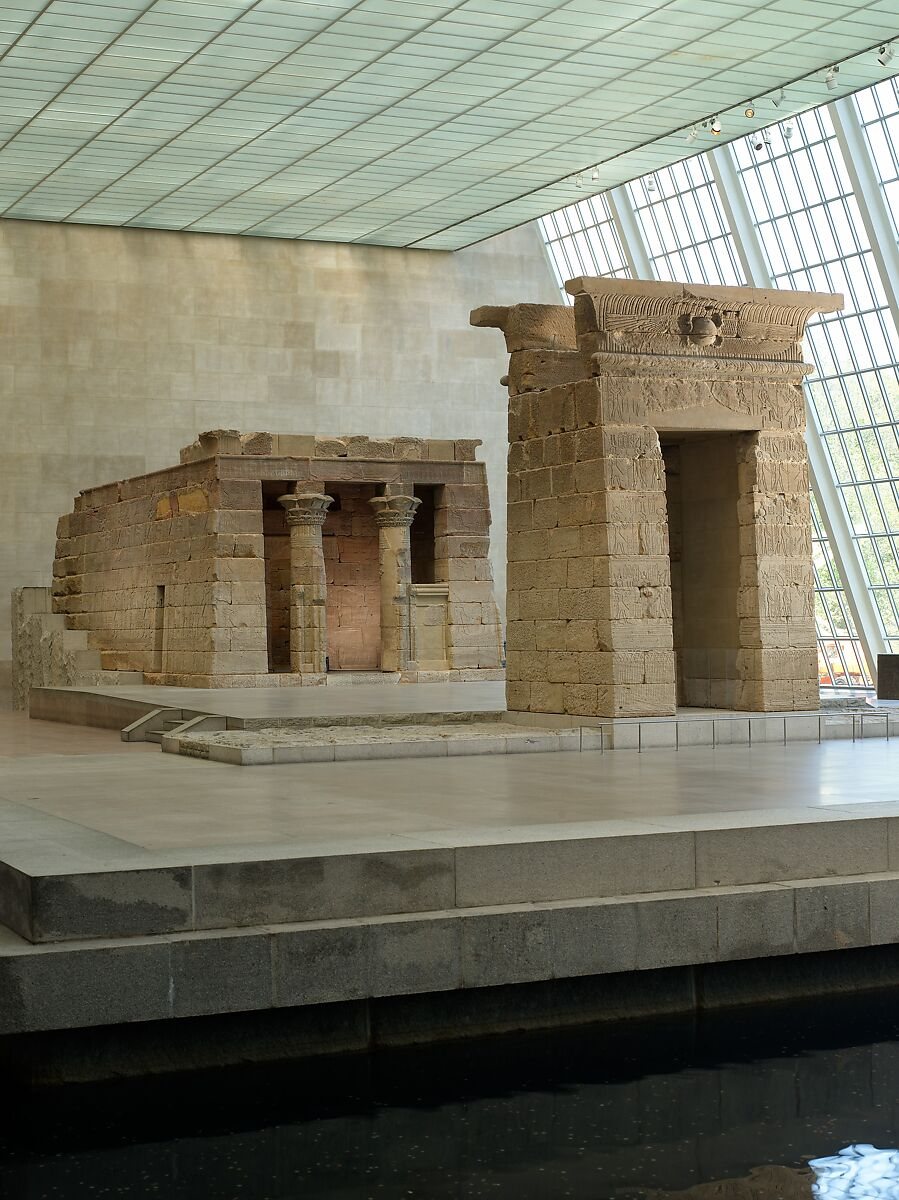
The Temple of Dendur
Built around 15 BC under the Roman emperor Augustus, this small temple on the Nile honours the goddess Isis. Egypt gave it to the United States in 1965 to save it from the rising waters of the new Aswan High Dam.
🎧 Audio guide available in the 3D museum
Did you know?
- Look for Emperor Augustus on the walls, dressed as an Egyptian pharaoh and making offerings to the gods.
- Look along the base for carved papyrus and lotus plants, with figures of Hapy, god of the Nile.
- Above the gateway, look for a sun disk spreading the wings of the falcon god Horus.
- The temple also honours two brothers, Pedesi and Pihor, sons of a local Nubian ruler.
- In the 1800s travellers carved their names on it, such as a British naval officer: A L Corry RN 1817.
- It crossed the Atlantic in 661 crates in 1968; at the Met, a pool and sloping wall recall the Nile and its cliffs.
About this culture
In 30 BC Egypt became a province of the Roman Empire, but its age-old artistic traditions lived on for centuries.
Roman emperors were carved on temple walls dressed as pharaohs, and Egyptian, Greek and Roman styles blended in temples, statues and wonderfully lifelike painted portraits.
One of these temples, the Temple of Dendur, was a gift from Egypt to the United States in 1965 and now stands in the Met beside a pool of water that recalls the Nile.
More works
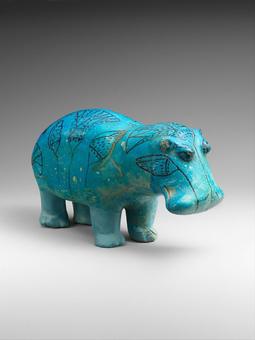 Hippopotamus (William)
Ancient Egypt, c. 1961–1878 BC
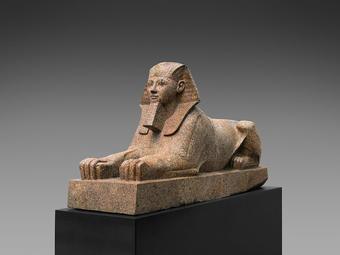 Sphinx of Hatshepsut
Ancient Egypt, c. 1473–1458 BC
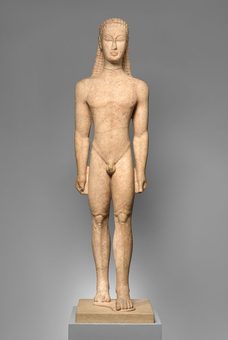 Marble statue of a kouros (youth)
Ancient Greece, c. 590–580 BC
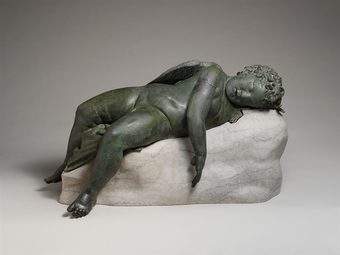 Bronze statue of Eros sleeping
Ancient Greece, 3rd–2nd century BC
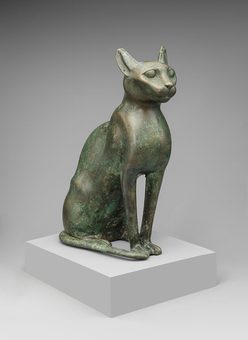 Cat Statuette intended to contain a mummified cat
Ancient Egypt, 332–30 BC
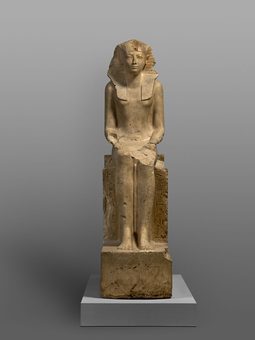 Seated Statue of Hatshepsut
Ancient Egypt, c. 1479–1458 BC
The museum is free for everyone. If you enjoy it, you can help us add new paintings and audio guides.
Secure payment via PayPal · any amount