Image: public domain, courtesy of The Metropolitan Museum of Art, New York
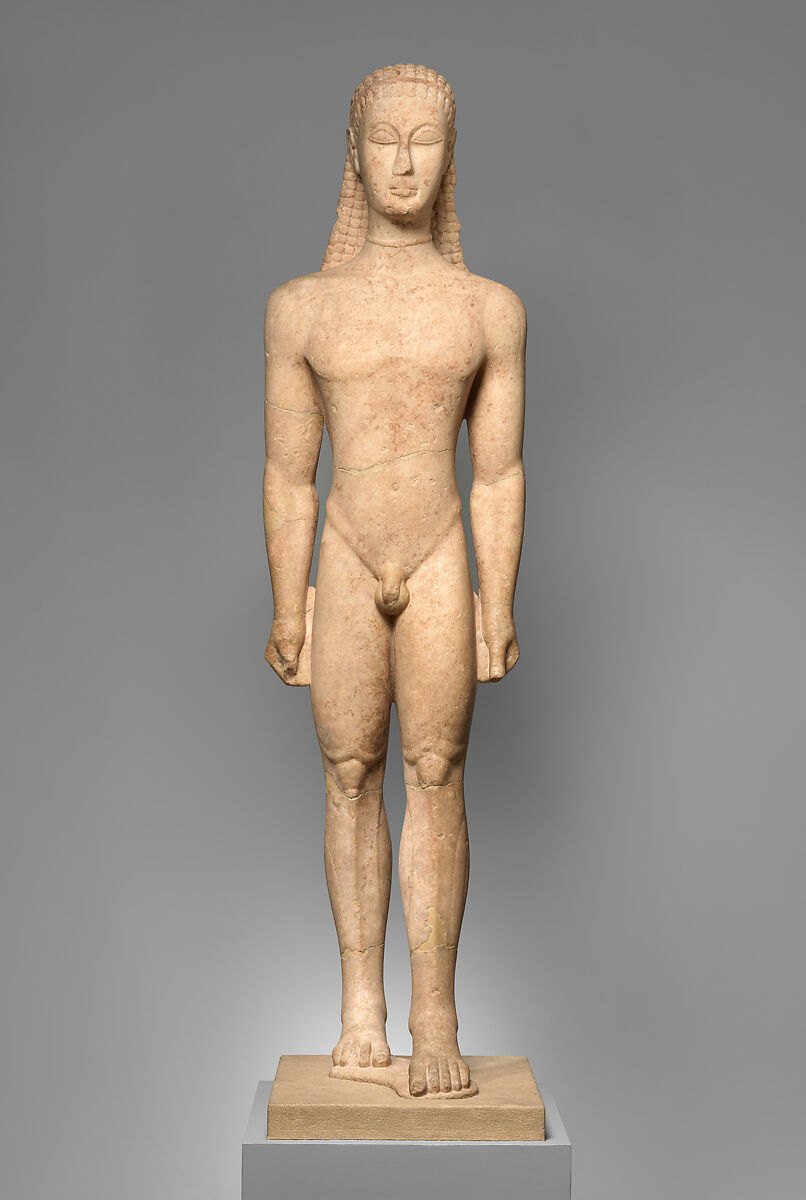
Marble statue of a kouros (youth)
A young man carved in marble stands straight and still, looking ahead, with his arms at his sides and his left foot a step forward. His long hair falls down his back in neat rows like strings of little beads, held by a thin band, and his large eyes gaze calmly into the distance.
🎧 Audio guide available in the 3D museum
Did you know?
- Carved around 590–580 BC, it is one of the earliest marble statues of a person made in Attica, the region around Athens.
- The statue once stood over the grave of a young man from a noble Athenian family.
- Greek sculptors borrowed this upright stance, with one foot forward, from the statues of ancient Egypt.
- It is carved from marble that came from the Greek island of Naxos.
- His hands are clenched into fists, as was usual for these early statues of young men.
- Standing almost two metres tall, the youth is larger than life.
About this culture
Ancient Greek art grew over many centuries, from the stiff, patterned statues of the Archaic period (about 650–480 BC) to ever more lifelike figures in later times.
Greek sculptors carved gods, heroes and young athletes in marble and cast them in bronze, and their statues were originally brightly painted.
Most Greek bronze statues were later melted down for their metal, so the few that survive, like the sleeping Eros, are true treasures.
More works
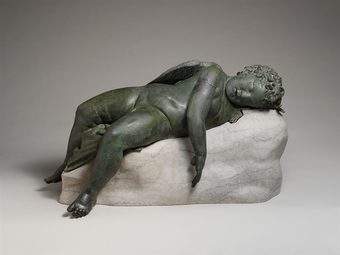 Bronze statue of Eros sleeping
Ancient Greece, 3rd–2nd century BC
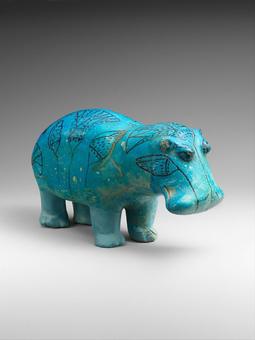 Hippopotamus (William)
Ancient Egypt, c. 1961–1878 BC
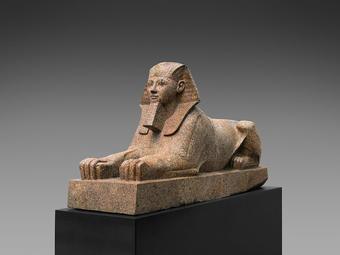 Sphinx of Hatshepsut
Ancient Egypt, c. 1473–1458 BC
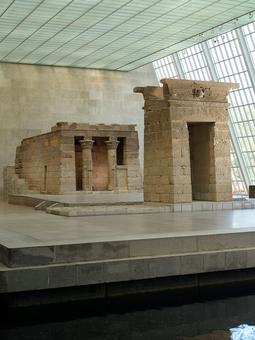 The Temple of Dendur
Ancient Egypt (Roman period), c. 15 BC
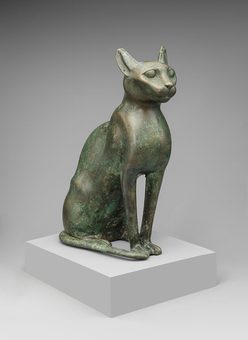 Cat Statuette intended to contain a mummified cat
Ancient Egypt, 332–30 BC
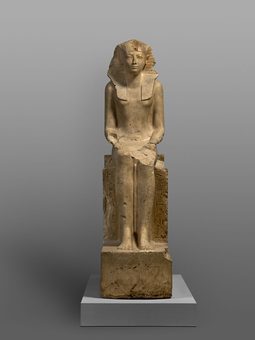 Seated Statue of Hatshepsut
Ancient Egypt, c. 1479–1458 BC
The museum is free for everyone. If you enjoy it, you can help us add new paintings and audio guides.
Secure payment via PayPal · any amount