Image: public domain, courtesy of The Metropolitan Museum of Art, New York
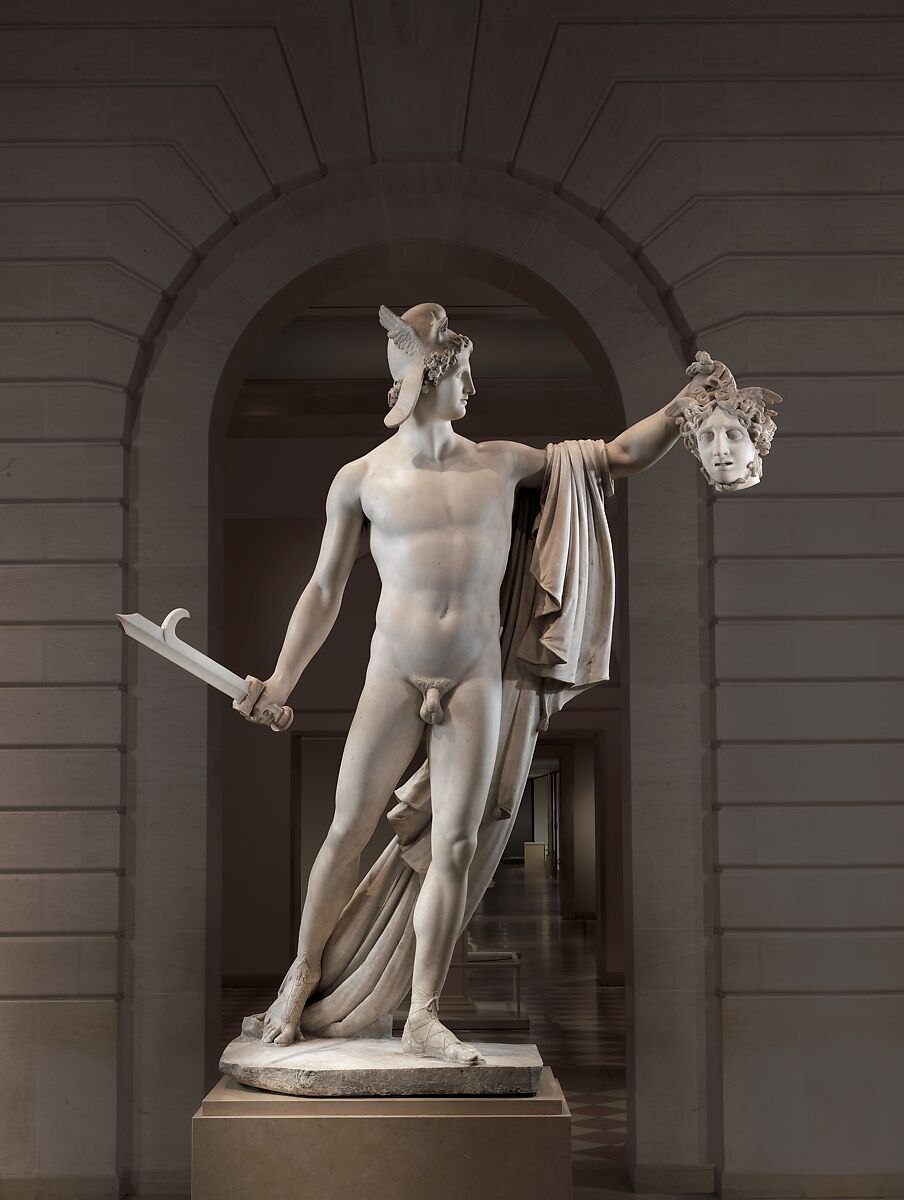
Perseus with the Head of Medusa
The young hero Perseus stands tall in white marble, holding up the head of Medusa in his left hand and a curved sword in his right. He wears a helmet with little wings, a cloak hangs from his raised arm, and Medusa's face looks strangely calm and beautiful, with snakes curling in her hair.
🎧 Audio guide available in the 3D museum
Did you know?
- Canova first carved his Perseus in 1800–1801, and that first statue is now in the Vatican Museums in Rome.
- Pope Pius VII bought the first Perseus and placed it on the pedestal of the famous ancient Apollo Belvedere, which had been taken away to France.
- Canova based the proud pose and proportions of his hero on the Apollo Belvedere.
- The statue in New York is a second version, ordered in 1804 by a Polish noble couple, Count Jan and Countess Waleria Tarnowski.
- The calm, beautiful face of Medusa was modelled on an ancient marble head known as the Medusa Rondanini.
- Perseus wears the winged cap and sandals of the god Mercury and holds the sword he was given for his task.
About the artist
Antonio Canova (1757–1822) was born in Possagno, near Venice, and worked mainly in Venice and Rome.
He became the most celebrated sculptor of his age, famous for graceful marble figures such as Psyche Revived by Cupid's Kiss and the reclining Pauline Borghese.
Raised by his grandfather, a village stonemason, he later used his fame to help bring home to Italy many artworks that had been taken to Paris under Napoleon.
More works
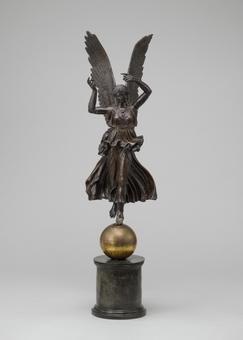 Winged Victory
Antonio Canova, c. 1803/06
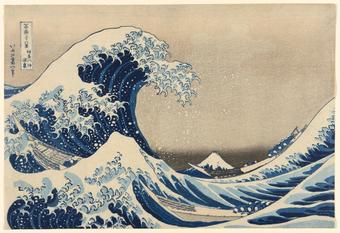 Under the Wave off Kanagawa (The Great Wave)
Katsushika Hokusai, 1830/33
 The Horse Fair
Rosa Bonheur, 1852–55
 The Burning of the Houses of Lords and Commons
J. M. W. Turner, 1835
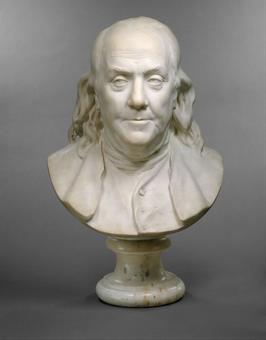 Benjamin Franklin
Jean-Antoine Houdon, 1778
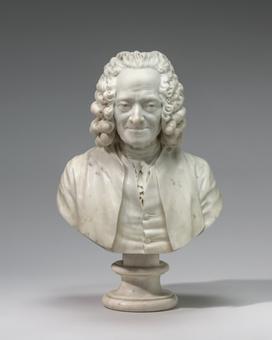 Voltaire
Jean-Antoine Houdon, 1778
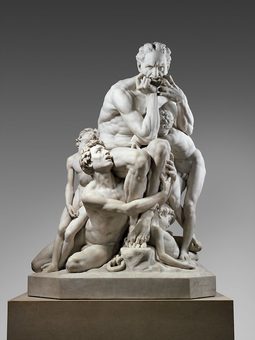 Ugolino and His Sons
Jean-Baptiste Carpeaux, 1865–67
The museum is free for everyone. If you enjoy it, you can help us add new paintings and audio guides.
Secure payment via PayPal · any amount