Image: public domain, courtesy of The Metropolitan Museum of Art, New York
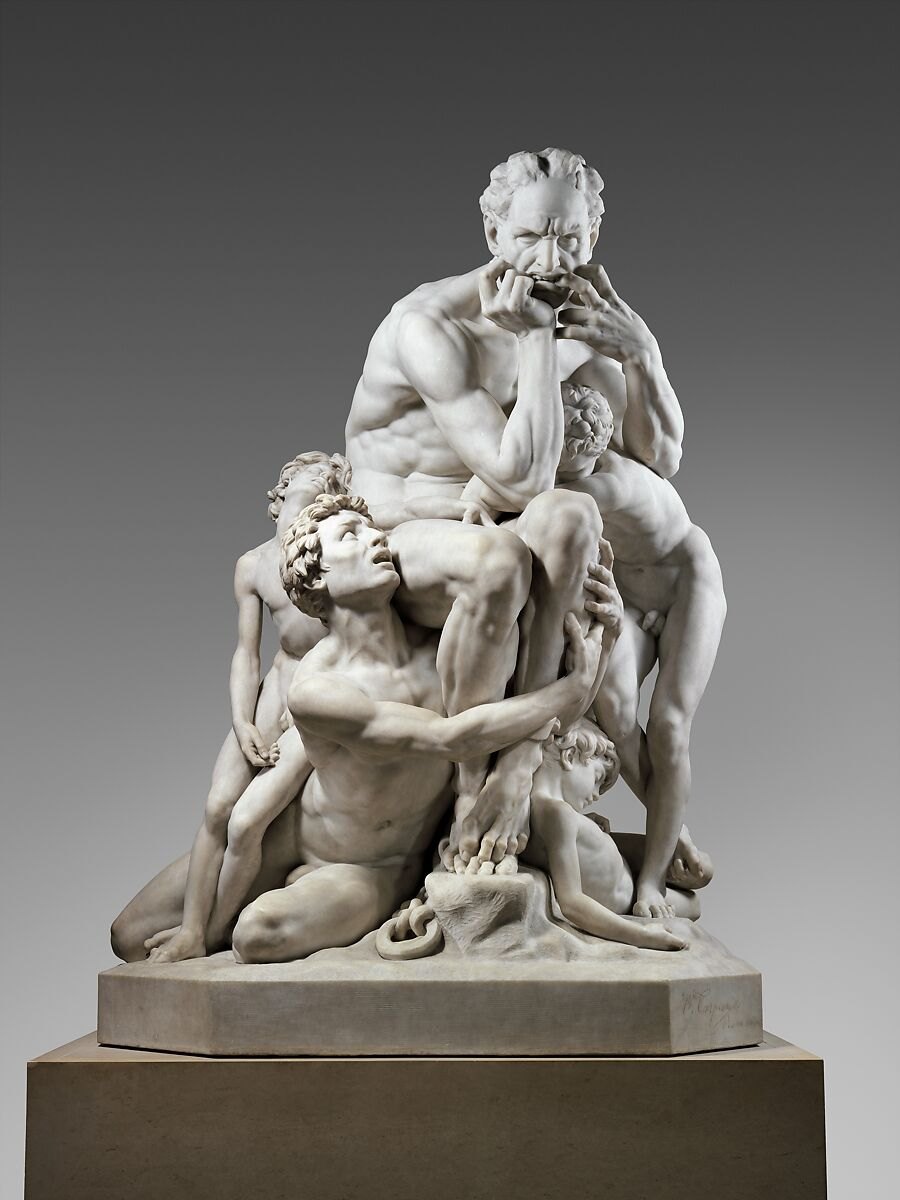
Ugolino and His Sons
A father sits hunched on a rock, staring far into the distance, while his four children cling to him and press close around him. The scene comes from Dante's great poem, which tells of Count Ugolino imprisoned with his sons, and the sculptor shows the father's grief so strongly that we see it even in his tightly curled toes.
🎧 Audio guide available in the 3D museum
Did you know?
- The scene comes from the 33rd canto of the Inferno, the first part of Dante's Divine Comedy.
- Carpeaux won the Prix de Rome in 1854 and created the first version of this group as a student at the Villa Medici in Rome.
- He deeply admired Michelangelo, and the figure of Ugolino recalls Michelangelo's Last Judgment in the Sistine Chapel.
- A bronze cast was placed in the Tuileries Gardens in Paris, as a companion to a bronze copy of the famous ancient Laocoön.
- This marble version was made for the owner of the Saint-Béat marble quarry and shown at the 1867 World's Fair in Paris.
- The group made Carpeaux famous and led to new commissions, including The Dance for the façade of the Paris Opera.
About the artist
Jean-Baptiste Carpeaux (1827–1875) was born in Valenciennes in northern France into a family of stonemasons and studied in Paris with the sculptor François Rude.
In 1854 he won the Prix de Rome, and in Rome he created Ugolino and His Sons, a dramatic group based on Dante's Divine Comedy.
His lively group The Dance for the facade of the Paris Opéra, finished in 1869, caused a sensation and was even attacked as immoral when it was unveiled.
More works
 Under the Wave off Kanagawa (The Great Wave)
Katsushika Hokusai, 1830/33
 The Horse Fair
Rosa Bonheur, 1852–55
 The Burning of the Houses of Lords and Commons
J. M. W. Turner, 1835
 Benjamin Franklin
Jean-Antoine Houdon, 1778
 Voltaire
Jean-Antoine Houdon, 1778
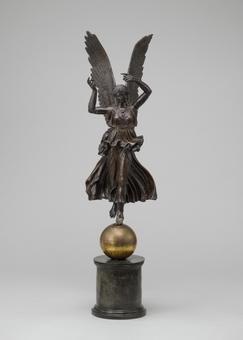 Winged Victory
Antonio Canova, c. 1803/06
The museum is free for everyone. If you enjoy it, you can help us add new paintings and audio guides.
Secure payment via PayPal · any amount