Image: public domain, courtesy of The Cleveland Museum of Art
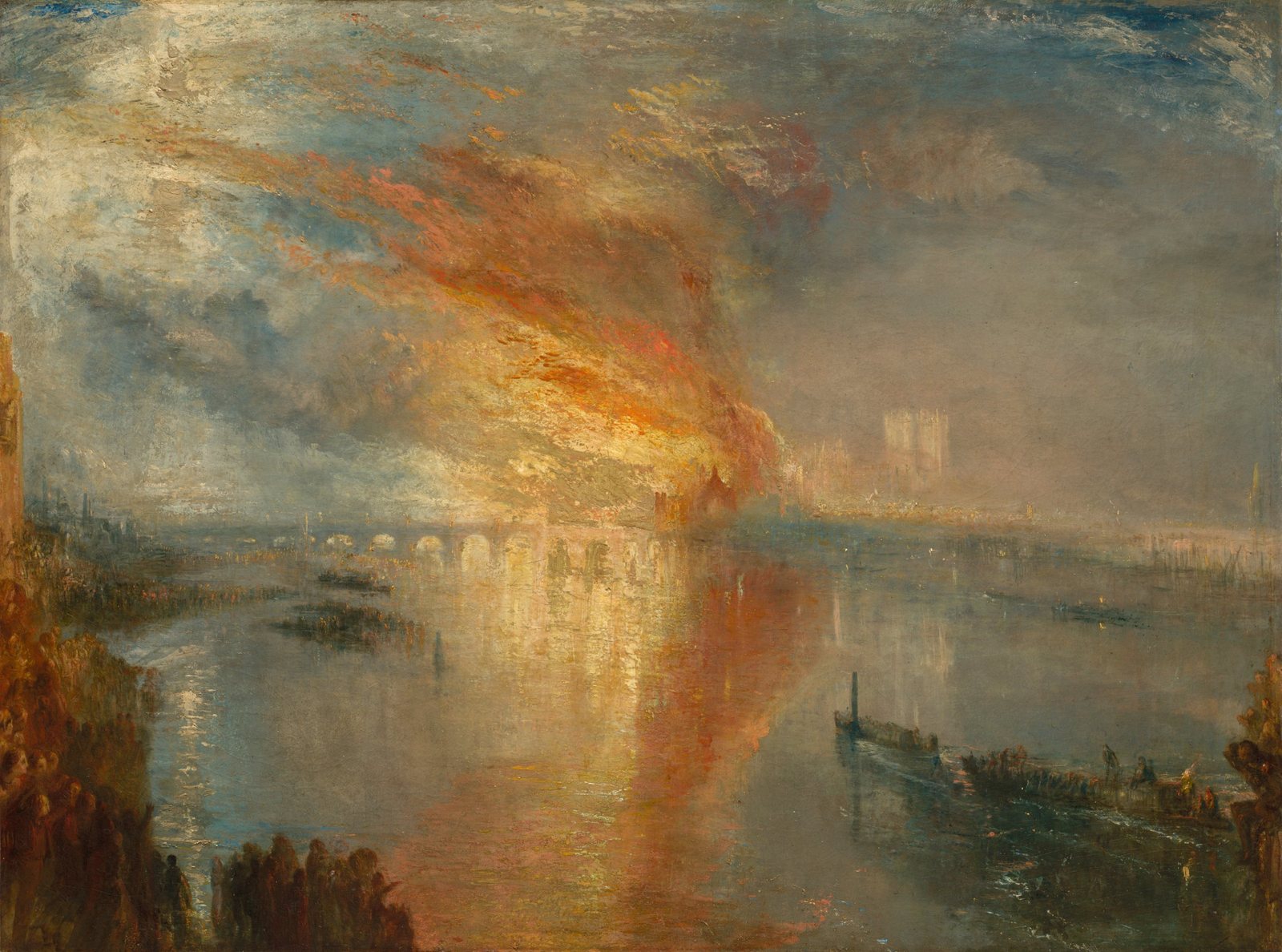
The Burning of the Houses of Lords and Commons
On the night of 16 October 1834, a great fire destroyed the Houses of Parliament in London as crowds watched from the river. Turner made the flames even taller than they really were, to show the power of nature.
🎧 Audio guide available in the 3D museum
Did you know?
- The fire began when workmen burned piles of old wooden tally sticks, once used to record taxes, in a furnace.
- Turner was in the crowd that night and made quick sketches of the blaze.
- A low tide made it hard to pump river water, so the fire burned out of control for hours.
- Look for the small boats in the lower right, heading toward the flames.
- Turner painted a second version, now in Philadelphia, seen from across Westminster Bridge.
- Westminster Hall, the oldest part of the palace, survived the fire.
About the artist
Joseph Mallord William Turner (1775–1851) was born in London and worked there all his life, often traveling across Britain and Europe to sketch.
Called the painter of light, he is famous for glowing seas, skies and storms, in works such as The Fighting Temeraire and Rain, Steam and Speed.
He was the son of a barber who proudly displayed the boy's drawings in his shop window, and by the age of fourteen Turner was a student at the Royal Academy.
More works
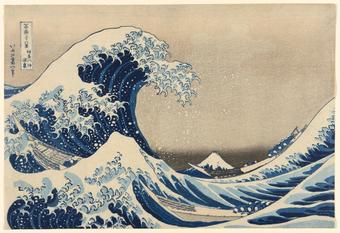 Under the Wave off Kanagawa (The Great Wave)
Katsushika Hokusai, 1830/33
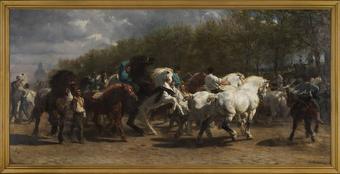 The Horse Fair
Rosa Bonheur, 1852–55
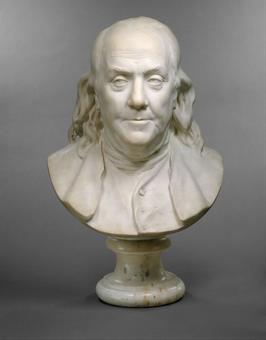 Benjamin Franklin
Jean-Antoine Houdon, 1778
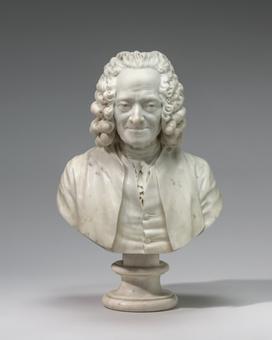 Voltaire
Jean-Antoine Houdon, 1778
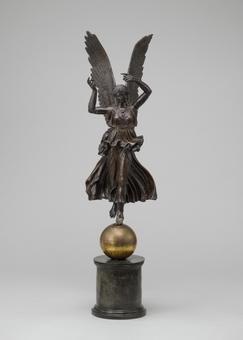 Winged Victory
Antonio Canova, c. 1803/06
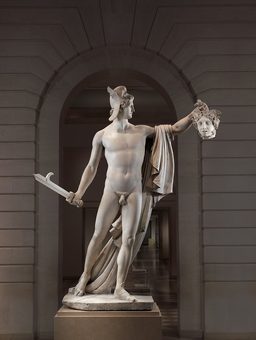 Perseus with the Head of Medusa
Antonio Canova, 1804–06
The museum is free for everyone. If you enjoy it, you can help us add new paintings and audio guides.
Secure payment via PayPal · any amount