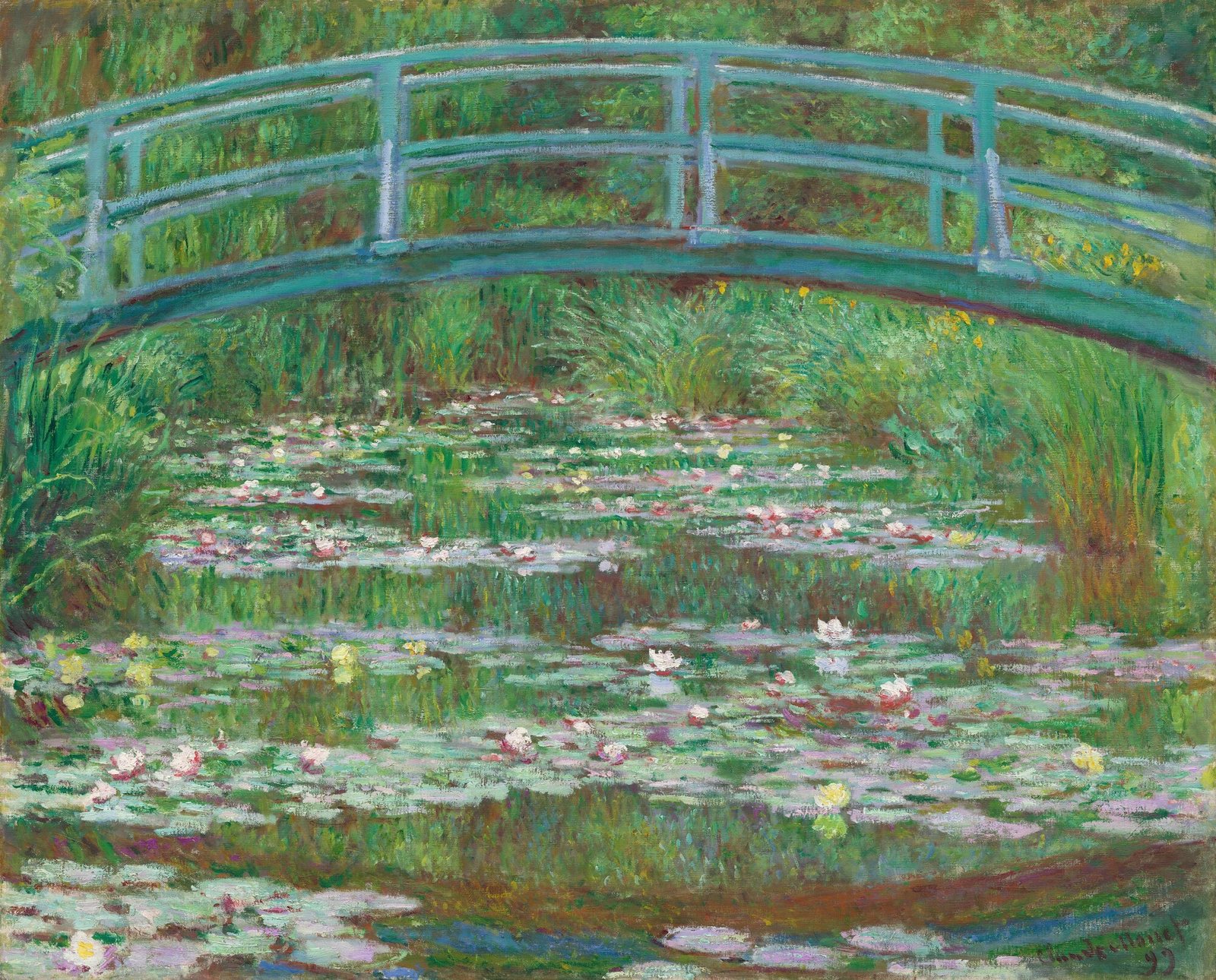
Image: public domain, courtesy of Courtesy National Gallery of Art, Washington
The Japanese Footbridge
Monet designed this water garden himself at his home in Giverny, France, including the pond and the arched bridge. In 1899 he painted twelve views of it, all from the same spot.
🎧 Audio guide available in the 3D museum
Did you know?
- Before it became a garden, this was a swampy plot across the railway line, which Monet bought in 1893.
- Look at the shadows under the bridge: Monet painted them in deep purple, not black.
- The bridge almost touches the top edge and runs off both sides, so we feel we are standing right in front of it.
- Look for the signature in the lower right corner: Claude Monet 99.
- Monet first rented his house at Giverny in 1883 and was able to buy it seven years later.
- The dealer Durand-Ruel bought it from Monet in January 1900 and showed it in his Paris gallery that same year.
About the artist
Claude Monet (1840–1926) was born in Paris, grew up by the sea in Le Havre, and from 1883 lived and painted at Giverny in Normandy.
He was the guiding spirit of Impressionism, which took its name from his painting Impression, Sunrise, and he is beloved for his haystacks, cathedrals and water lilies.
As a teenager he earned pocket money drawing funny caricatures of local people, and later he lovingly tended a garden with a Japanese bridge that he painted again and again.
More works
 Water Lilies
Claude Monet, 1906
 Stacks of Wheat (End of Summer)
Claude Monet, 1890–91
 Arrival of the Normandy Train, Gare Saint-Lazare
Claude Monet, 1877
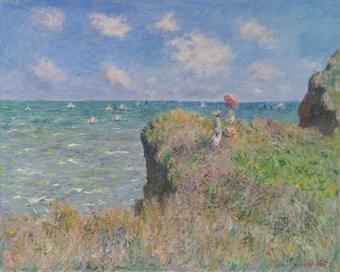 Cliff Walk at Pourville
Claude Monet, 1882
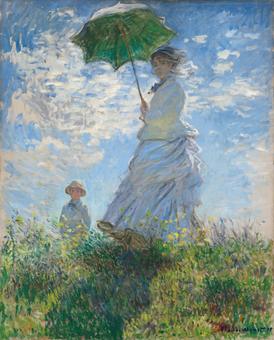 Woman with a Parasol – Madame Monet and Her Son
Claude Monet, 1875
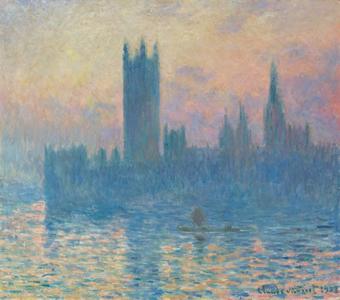 The Houses of Parliament, Sunset
Claude Monet, 1903
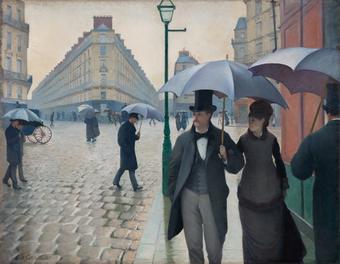 Paris Street; Rainy Day
Gustave Caillebotte, 1877
 Two Sisters (On the Terrace)
Auguste Renoir, 1881
The museum is free for everyone. If you enjoy it, you can help us add new paintings and audio guides.
Secure payment via PayPal · any amount