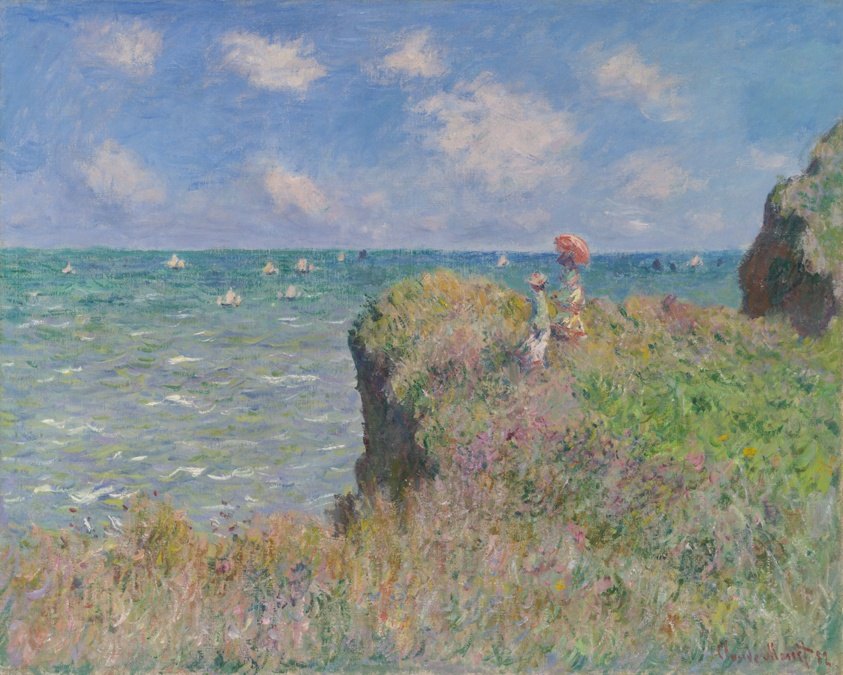
Image: public domain, courtesy of The Art Institute of Chicago
Cliff Walk at Pourville
Two young women in summer dresses stand on a windy, grassy cliff above the sea at Pourville, a fishing village in Normandy. Monet painted the grass, the dresses and the waves with quick, lively strokes, so the whole scene seems to move in the breeze.
🎧 Audio guide available in the 3D museum
Did you know?
- In 1882 alone, Monet painted nearly a hundred pictures of the Normandy coast.
- The two women may be the daughters of Alice Hoschedé, whose family lived together with Monet's.
- Monet laid wet paint into wet paint, so the colours blend and smear right on the canvas.
- He came back to many of these seaside pictures again and again, sometimes for ten to twenty painting sessions.
- X-rays show that Monet made the dark rocky cliff on the right smaller to balance the sea and the sky.
- Look for the tiny sailing boats on the horizon, out on the English Channel.
About the artist
Claude Monet (1840–1926) was born in Paris, grew up by the sea in Le Havre, and from 1883 lived and painted at Giverny in Normandy.
He was the guiding spirit of Impressionism, which took its name from his painting Impression, Sunrise, and he is beloved for his haystacks, cathedrals and water lilies.
As a teenager he earned pocket money drawing funny caricatures of local people, and later he lovingly tended a garden with a Japanese bridge that he painted again and again.
More works
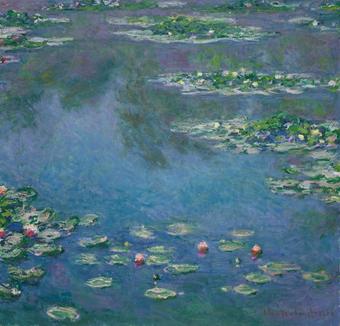 Water Lilies
Claude Monet, 1906
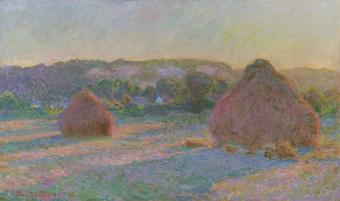 Stacks of Wheat (End of Summer)
Claude Monet, 1890–91
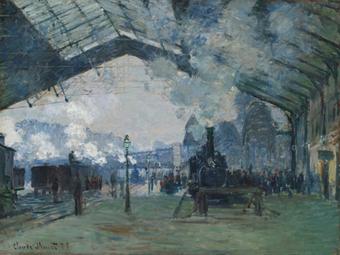 Arrival of the Normandy Train, Gare Saint-Lazare
Claude Monet, 1877
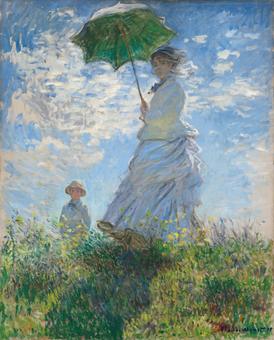 Woman with a Parasol – Madame Monet and Her Son
Claude Monet, 1875
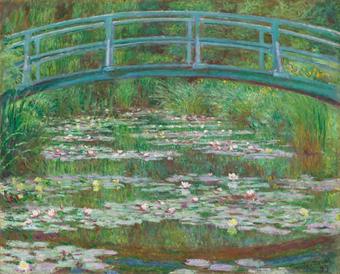 The Japanese Footbridge
Claude Monet, 1899
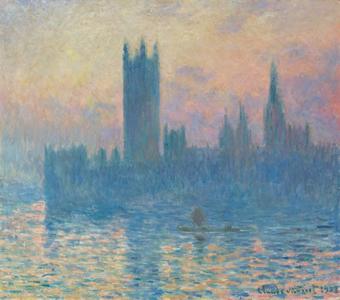 The Houses of Parliament, Sunset
Claude Monet, 1903
 Paris Street; Rainy Day
Gustave Caillebotte, 1877
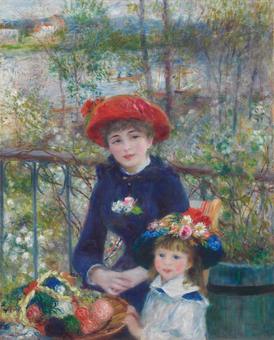 Two Sisters (On the Terrace)
Auguste Renoir, 1881
The museum is free for everyone. If you enjoy it, you can help us add new paintings and audio guides.
Secure payment via PayPal · any amount