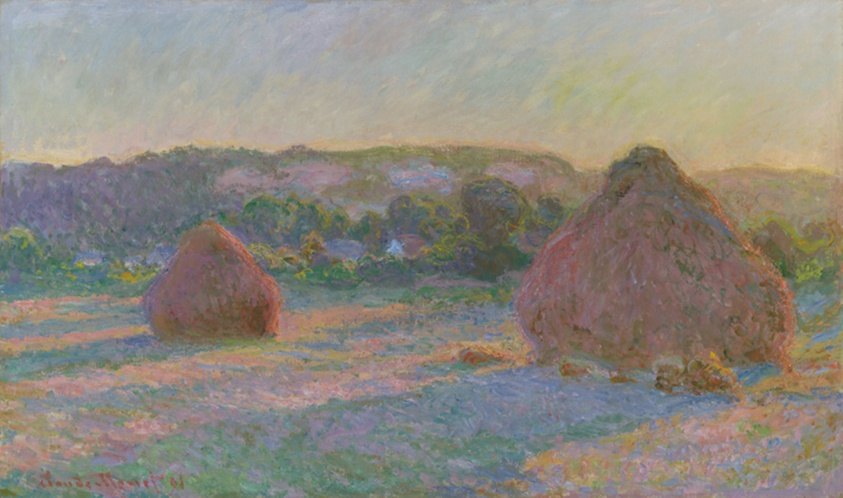
Image: public domain, courtesy of The Art Institute of Chicago
Stacks of Wheat (End of Summer)
These big stacks of harvested wheat stood in a field just outside Monet's house in Giverny. He painted the same stacks again and again, to catch how they changed with the light, the weather and the seasons.
🎧 Audio guide available in the 3D museum
Did you know?
- The main series has 25 paintings of these stacks, made in 1890 and 1891.
- Monet worked on several canvases at once, switching to another one as the light changed.
- In May 1891 he showed 15 of the stack paintings together at the Durand-Ruel gallery in Paris, and the show was a huge success.
- After the stacks, Monet went on to paint other series, such as poplar trees and Rouen Cathedral.
- Potter and Bertha Palmer of Chicago bought Monet's stack paintings in 1891, this one included, and it later came to the Art Institute from their family.
- In 2019 another painting from this series sold at auction for 110.7 million dollars, a record for Monet.
About the artist
Claude Monet (1840–1926) was born in Paris, grew up by the sea in Le Havre, and from 1883 lived and painted at Giverny in Normandy.
He was the guiding spirit of Impressionism, which took its name from his painting Impression, Sunrise, and he is beloved for his haystacks, cathedrals and water lilies.
As a teenager he earned pocket money drawing funny caricatures of local people, and later he lovingly tended a garden with a Japanese bridge that he painted again and again.
More works
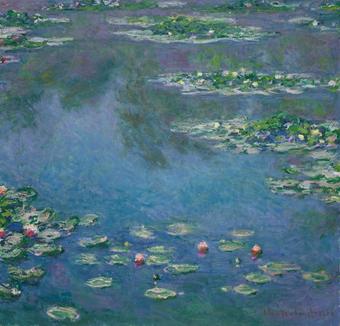 Water Lilies
Claude Monet, 1906
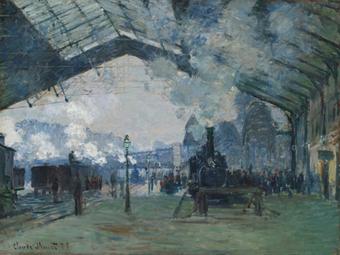 Arrival of the Normandy Train, Gare Saint-Lazare
Claude Monet, 1877
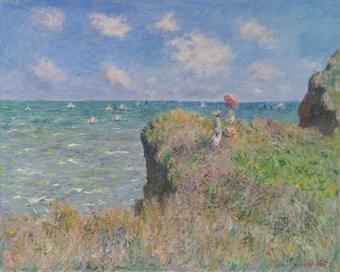 Cliff Walk at Pourville
Claude Monet, 1882
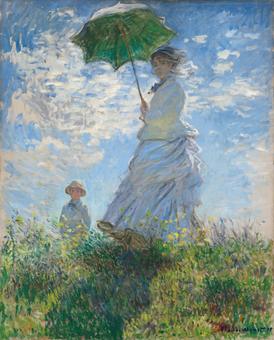 Woman with a Parasol – Madame Monet and Her Son
Claude Monet, 1875
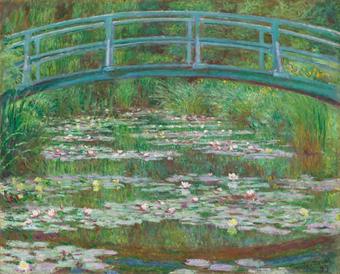 The Japanese Footbridge
Claude Monet, 1899
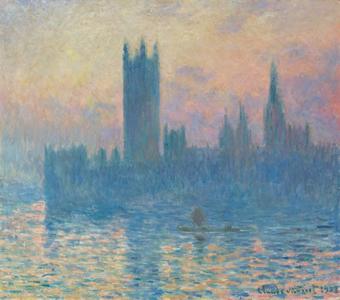 The Houses of Parliament, Sunset
Claude Monet, 1903
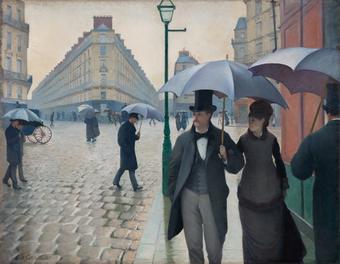 Paris Street; Rainy Day
Gustave Caillebotte, 1877
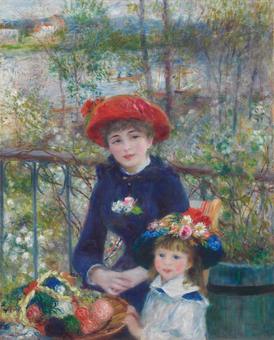 Two Sisters (On the Terrace)
Auguste Renoir, 1881
The museum is free for everyone. If you enjoy it, you can help us add new paintings and audio guides.
Secure payment via PayPal · any amount