Image: public domain, courtesy of The Art Institute of Chicago
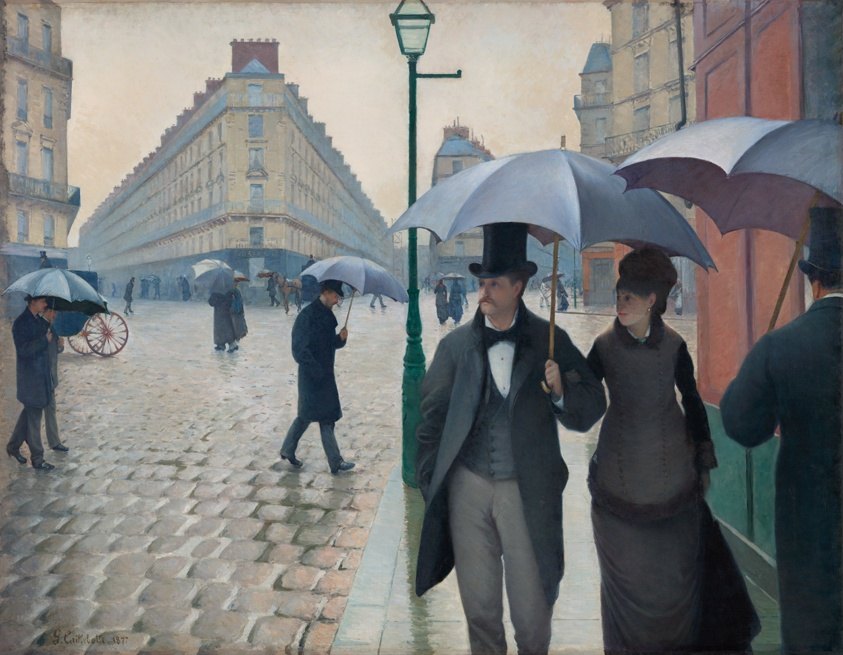
Paris Street; Rainy Day
Elegant Parisians with umbrellas cross a wide, new street crossing on a grey, rainy day. Caillebotte did not paint the raindrops: we feel the rain through the umbrellas and the shining wet cobblestones.
🎧 Audio guide available in the 3D museum
Did you know?
- This is Caillebotte's largest painting, about 2 metres high and almost 3 metres wide.
- The crossing is a few minutes from the Saint-Lazare railway station, close to where Caillebotte lived.
- These wide streets were brand new: Baron Haussmann's plan had rebuilt this part of Paris during Caillebotte's lifetime.
- It was shown in April 1877 at the third Impressionist exhibition, which Caillebotte himself largely organised.
- After Caillebotte died in 1894, the painting stayed with his brother Martial's family for decades.
- The American collector Walter P. Chrysler Jr. bought it in 1954, and the Art Institute of Chicago acquired it in 1964.
About the artist
Gustave Caillebotte (1848–1894) was born in Paris into a wealthy family, studied at the École des Beaux-Arts and became a friend of Monet and Renoir.
He painted modern Paris and its people, from The Floor Scrapers of 1875 to Paris Street; Rainy Day of 1877, with its bold, deep perspective.
He used his fortune to buy his friends' paintings and help organise their exhibitions, and he loved sailing so much that he raced his own boats in regattas on the Seine.
More works
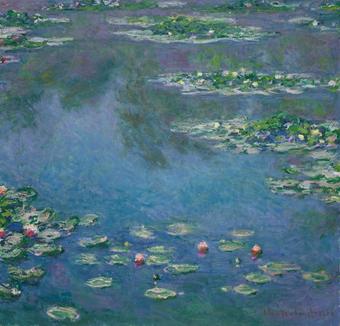 Water Lilies
Claude Monet, 1906
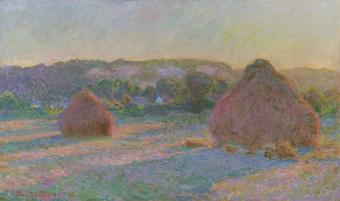 Stacks of Wheat (End of Summer)
Claude Monet, 1890–91
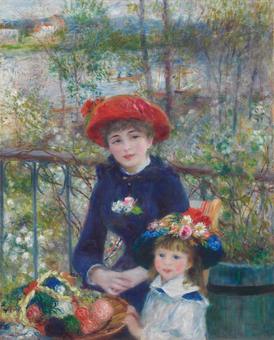 Two Sisters (On the Terrace)
Auguste Renoir, 1881
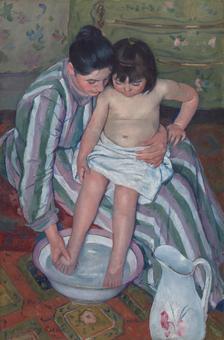 The Child's Bath
Mary Cassatt, 1893
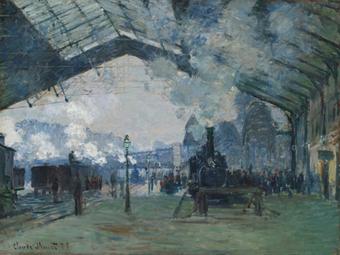 Arrival of the Normandy Train, Gare Saint-Lazare
Claude Monet, 1877
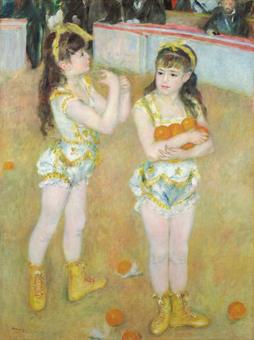 Acrobats at the Cirque Fernando (Francisca and Angelina Wartenberg)
Auguste Renoir, 1879
The museum is free for everyone. If you enjoy it, you can help us add new paintings and audio guides.
Secure payment via PayPal · any amount