Image: public domain, courtesy of Rijksmuseum, Amsterdam
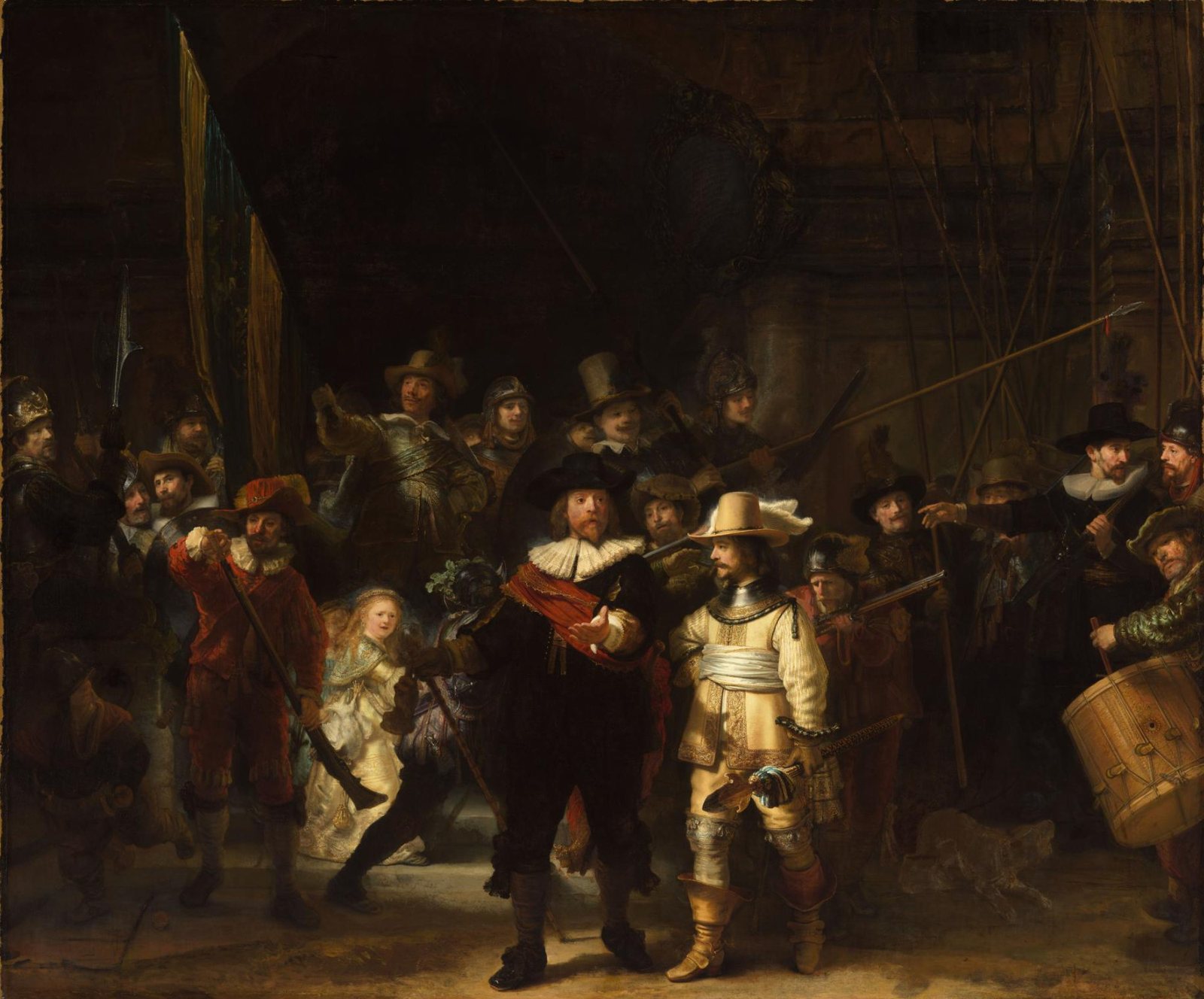
The Night Watch
This is Rembrandt's largest and most famous painting, made in 1642 for a hall of the city guard in Amsterdam. The captain in black tells his lieutenant to start the march, and a girl shines in the light among the guards.
🎧 Audio guide available in the 3D museum
Did you know?
- The name Night Watch came much later, in the late 1700s, when dark old varnish made this daytime scene look like night.
- In 1715 it moved to Amsterdam's Town Hall and was trimmed on all four sides to fit between two doors.
- Look for the shield by the gate: it lists the names of the guardsmen in the painting.
- The girl in gold has a dead chicken hanging from her belt; its claws were the symbol of this guard company.
- Look at the captain's hand: its shadow falls on the lieutenant's coat, right beside Amsterdam's coat of arms.
- During the Second World War it was hidden away, from 1942 in a cave in Maastricht.
About the artist
Rembrandt van Rijn (1606–1669) was born in Leiden and from the early 1630s worked in Amsterdam, the bustling heart of the Dutch Republic.
He is famous for his masterful light and shadow, for The Night Watch and The Jewish Bride, and for deeply human portraits.
Throughout his life he kept painting, drawing and etching his own face, around eighty self-portraits in all, like a diary told in pictures.
More works
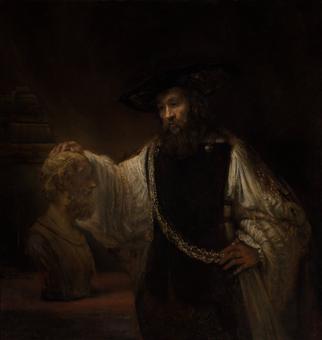 Aristotle with a Bust of Homer
Rembrandt, 1653
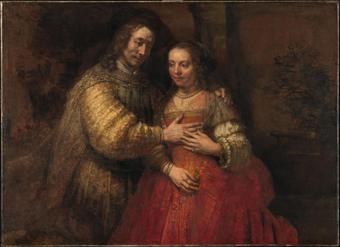 The Jewish Bride
Rembrandt, c. 1665–69
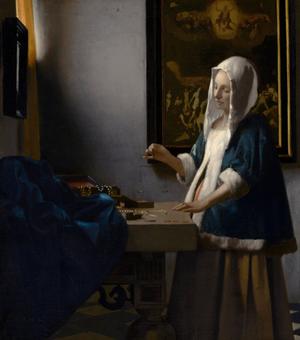 Woman Holding a Balance
Johannes Vermeer, c. 1664
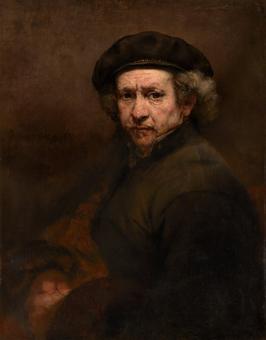 Self-Portrait
Rembrandt van Rijn, 1659
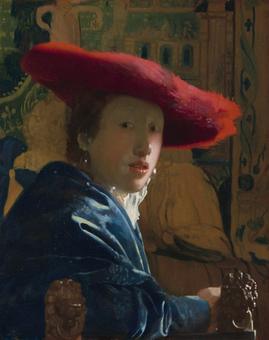 Girl with the Red Hat
Johannes Vermeer, c. 1669
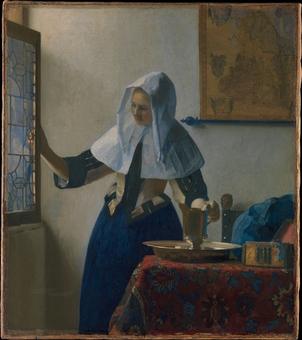 Young Woman with a Water Pitcher
Johannes Vermeer, c. 1662
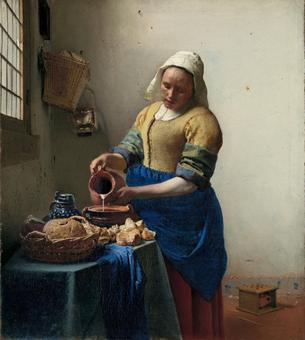 The Milkmaid
Johannes Vermeer, c. 1660
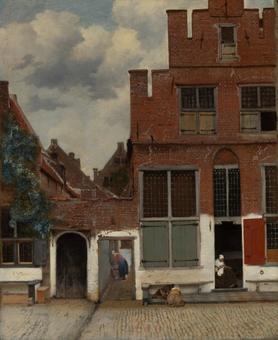 The Little Street
Johannes Vermeer, c. 1658
The museum is free for everyone. If you enjoy it, you can help us add new paintings and audio guides.
Secure payment via PayPal · any amount