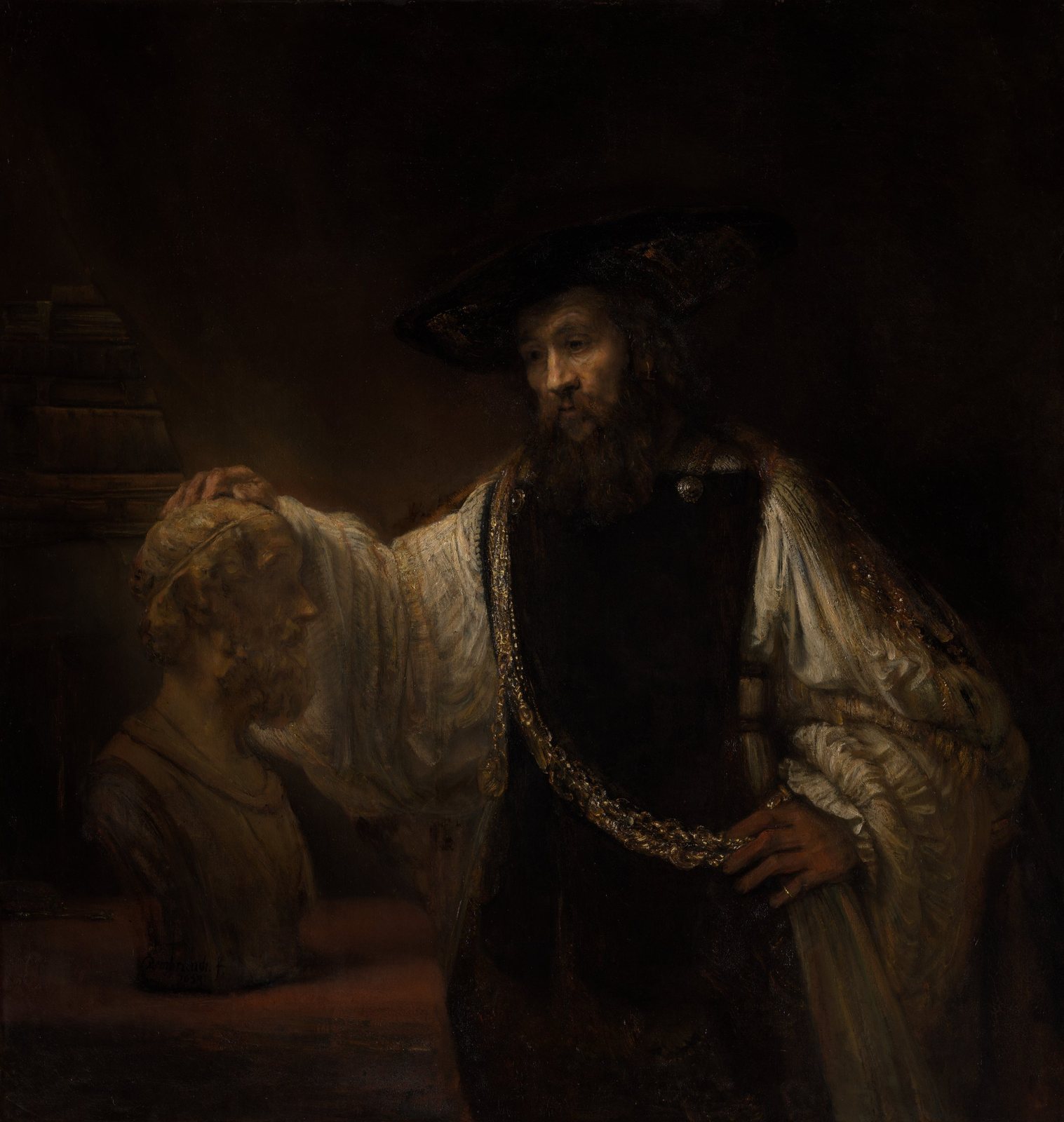
Image: public domain, courtesy of The Metropolitan Museum of Art, New York
Aristotle with a Bust of Homer
The ancient Greek thinker Aristotle rests his hand on a stone bust of the poet Homer. Rembrandt painted it in Amsterdam for a nobleman in Sicily, who received it in 1654.
🎧 Audio guide available in the 3D museum
Did you know?
- Look for the heavy gold chain with a medallion showing Alexander the Great, Aristotle’s famous pupil.
- The marble bust shows Homer as an old man; ancient stories say the great poet was blind.
- The Sicilian patron, Don Antonio Ruffo, liked it so much that he later ordered paintings of Alexander and of Homer from Rembrandt too.
- Ruffo was a passionate collector who owned 364 paintings when he died.
- Rembrandt painted it just when his dark, thickly textured style was going out of fashion in Amsterdam.
- In 1961 the Met bought it at an auction in New York for about 2.3 million dollars, then a record price.
About the artist
Rembrandt van Rijn (1606–1669) was born in Leiden and from the early 1630s worked in Amsterdam, the bustling heart of the Dutch Republic.
He is famous for his masterful light and shadow, for The Night Watch and The Jewish Bride, and for deeply human portraits.
Throughout his life he kept painting, drawing and etching his own face, around eighty self-portraits in all, like a diary told in pictures.
More works
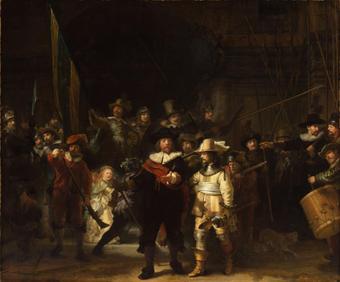 The Night Watch
Rembrandt, 1642
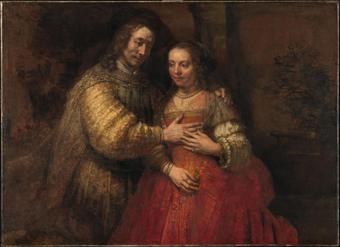 The Jewish Bride
Rembrandt, c. 1665–69
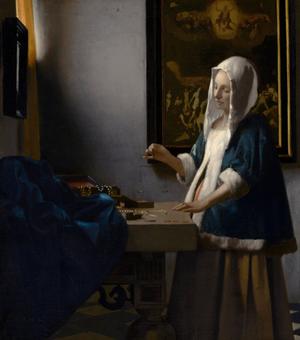 Woman Holding a Balance
Johannes Vermeer, c. 1664
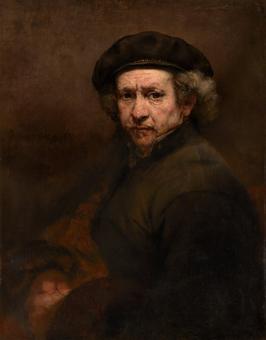 Self-Portrait
Rembrandt van Rijn, 1659
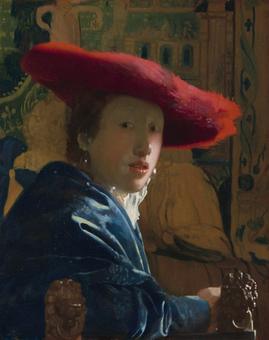 Girl with the Red Hat
Johannes Vermeer, c. 1669
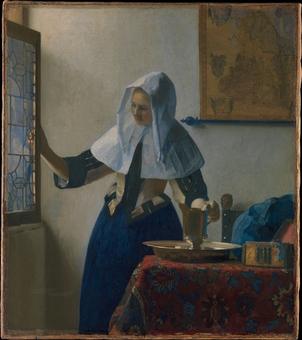 Young Woman with a Water Pitcher
Johannes Vermeer, c. 1662
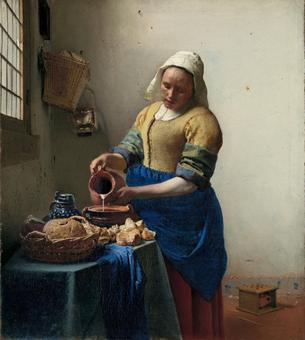 The Milkmaid
Johannes Vermeer, c. 1660
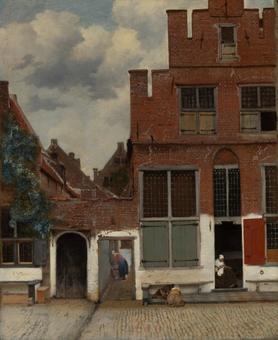 The Little Street
Johannes Vermeer, c. 1658
The museum is free for everyone. If you enjoy it, you can help us add new paintings and audio guides.
Secure payment via PayPal · any amount