Image: public domain, courtesy of Courtesy National Gallery of Art, Washington
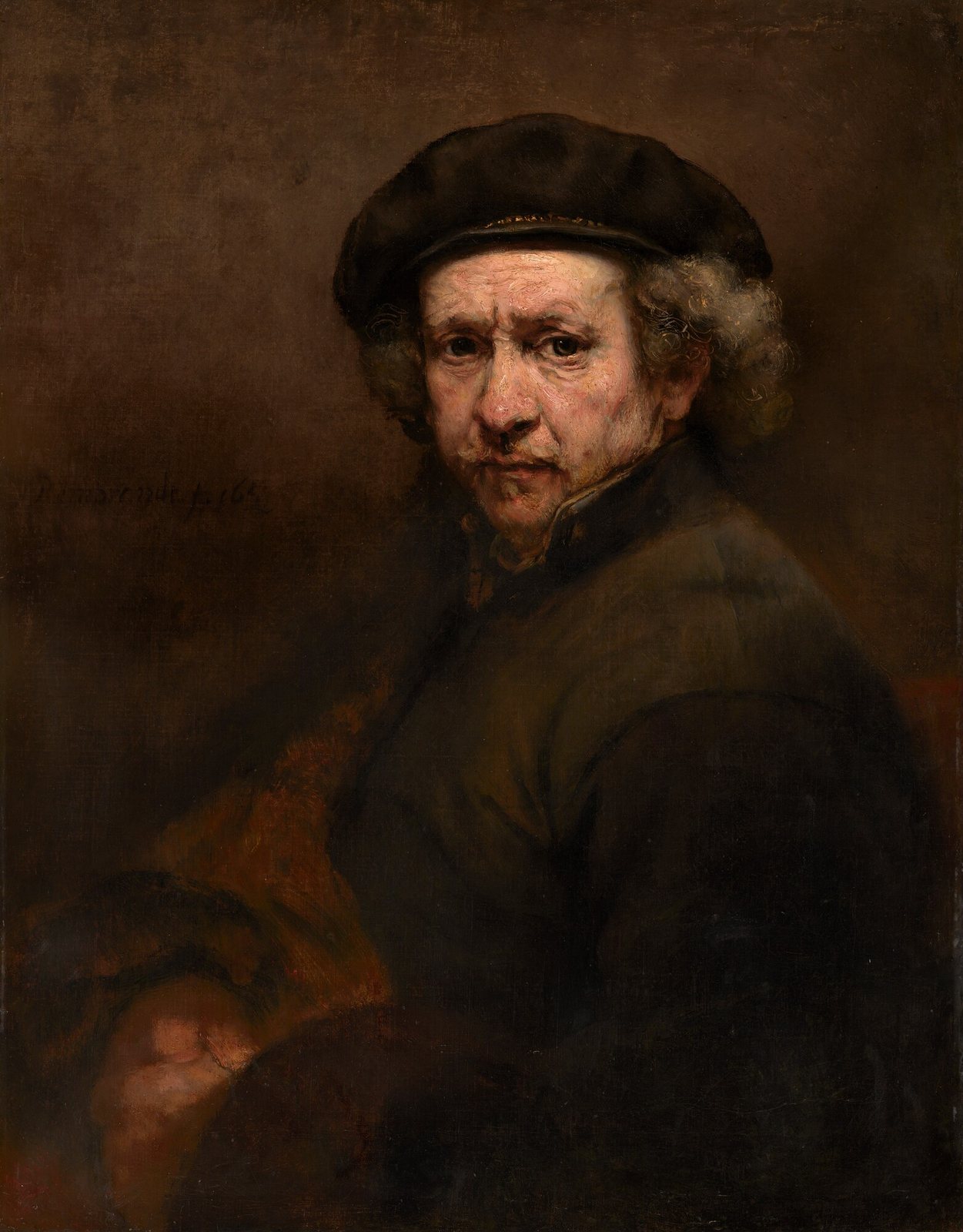
Self-Portrait
Rembrandt painted himself here at the age of 53, after he had been forced to sell his belongings to pay his debts. Even so, he looks out at us with quiet dignity, in a beret and a warm brown coat.
🎧 Audio guide available in the 3D museum
Did you know?
- Look for the signature at centre left, Rembrandt f. 1659; the f stands for fecit, Latin for made it.
- Look closely at his grey hair: Rembrandt scratched little curly lines into the paint.
- His folded hands sit in deep shadow at lower left, so the light falls almost only on his face.
- Rembrandt painted more than forty self-portraits, like a diary of his face from youth to old age.
- For about 160 years it belonged to English dukes, first the Duke of Montagu, then the Dukes of Buccleuch.
- Andrew W. Mellon bought it in 1929, and it was among the gifts that founded the National Gallery in 1937.
About the artist
Rembrandt van Rijn (1606–1669) was born in Leiden and from the early 1630s worked in Amsterdam, the bustling heart of the Dutch Republic.
He is famous for his masterful light and shadow, for The Night Watch and The Jewish Bride, and for deeply human portraits.
Throughout his life he kept painting, drawing and etching his own face, around eighty self-portraits in all, like a diary told in pictures.
More works
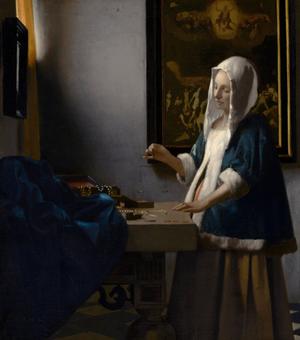 Woman Holding a Balance
Johannes Vermeer, c. 1664
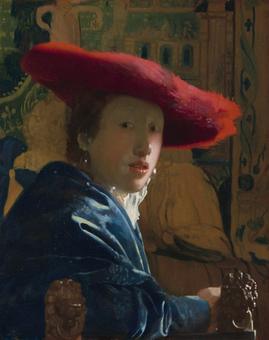 Girl with the Red Hat
Johannes Vermeer, c. 1669
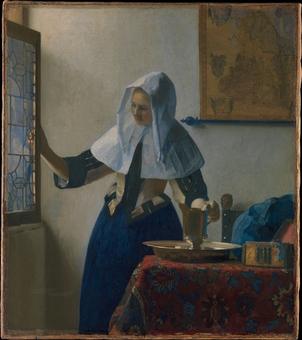 Young Woman with a Water Pitcher
Johannes Vermeer, c. 1662
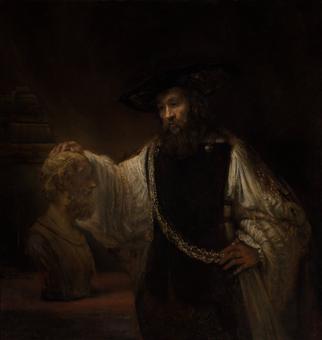 Aristotle with a Bust of Homer
Rembrandt, 1653
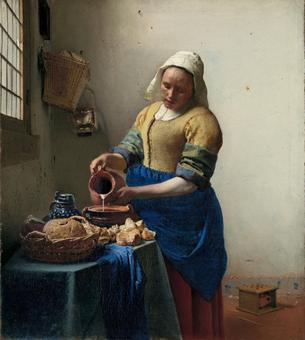 The Milkmaid
Johannes Vermeer, c. 1660
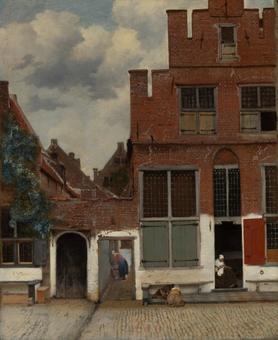 The Little Street
Johannes Vermeer, c. 1658
The museum is free for everyone. If you enjoy it, you can help us add new paintings and audio guides.
Secure payment via PayPal · any amount