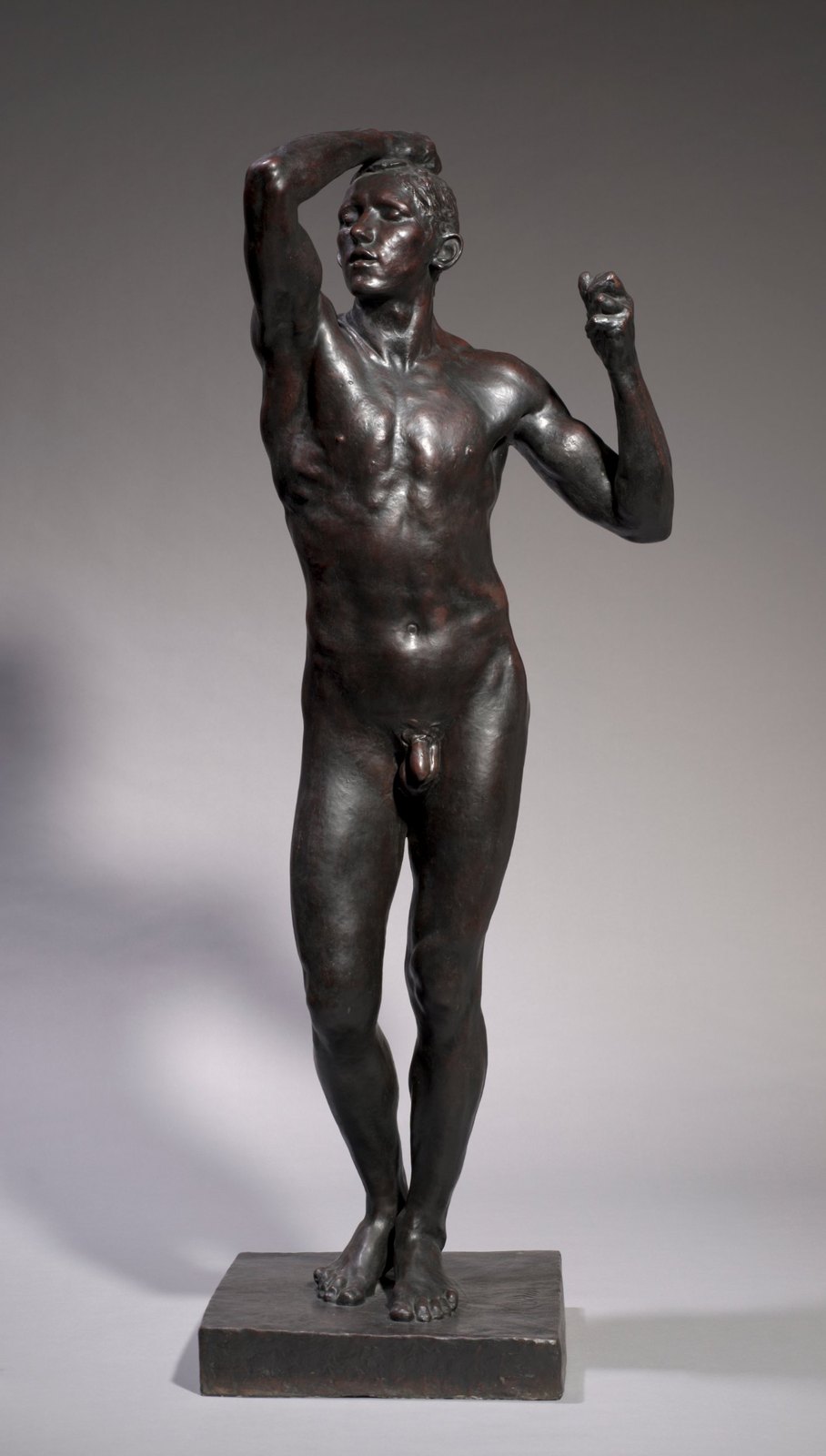
Image: public domain, courtesy of The Cleveland Museum of Art
The Age of Bronze
A life-size young man stands with his right hand on his head and his eyes almost closed, as if he is slowly waking from a deep sleep. His raised left hand is empty: it once held a spear, but Rodin took it away so that we look only at the man and his feelings.
🎧 Audio guide available in the 3D museum
Did you know?
- The model for the statue was Auguste Neyt, a young Belgian soldier.
- Rodin made the figure in Brussels and first showed it there in 1877 under a title meaning The Vanquished.
- The statue looked so real that critics falsely accused Rodin of making a cast from the body of a living person.
- To prove his honesty, Rodin showed photographs of his model standing in the same pose.
- The raised-elbow pose partly comes from Michelangelo's Dying Slave, a statue Rodin studied in the Louvre.
- Three years after the uproar, in 1880, Rodin received the commission for The Gates of Hell, the doorway that also gave birth to The Kiss.
About the artist
Auguste Rodin (1840–1917) was born in Paris and worked there and in nearby Meudon.
Often called the father of modern sculpture, he is famous for The Thinker, first imagined as the poet Dante, as well as The Kiss and The Burghers of Calais.
The École des Beaux-Arts turned him down three times, yet he never gave up and worked for years as a decorative craftsman until his talent was recognized.
More works
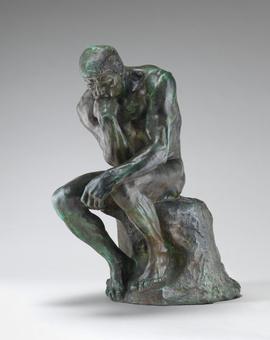 The Thinker
Auguste Rodin, 1880 (cast 1901)
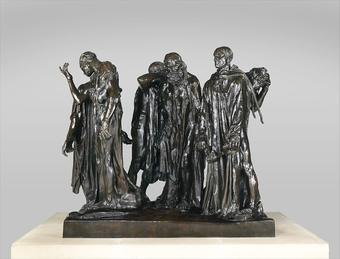 The Burghers of Calais
Auguste Rodin, 1884–95
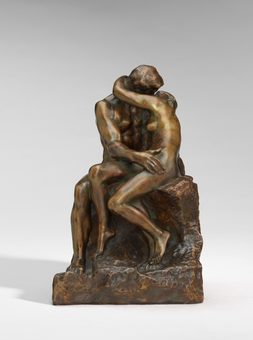 The Kiss (Le Baiser)
Auguste Rodin, 1880–1887
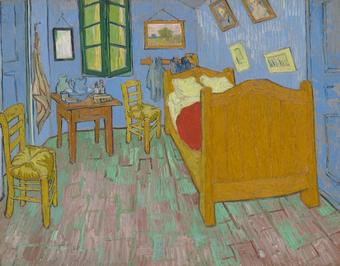 The Bedroom
Vincent van Gogh, 1889
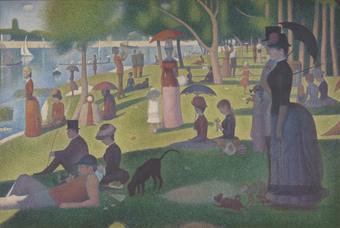 A Sunday on La Grande Jatte
Georges Seurat, 1884–86
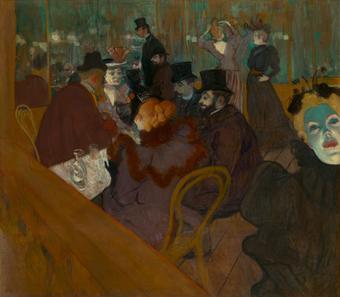 At the Moulin Rouge
Henri de Toulouse-Lautrec, 1892–95
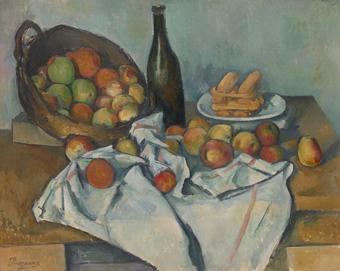 The Basket of Apples
Paul Cézanne, c. 1893
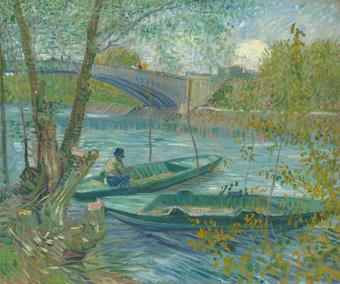 Fishing in Spring, the Pont de Clichy (Asnières)
Vincent van Gogh, 1887
The museum is free for everyone. If you enjoy it, you can help us add new paintings and audio guides.
Secure payment via PayPal · any amount