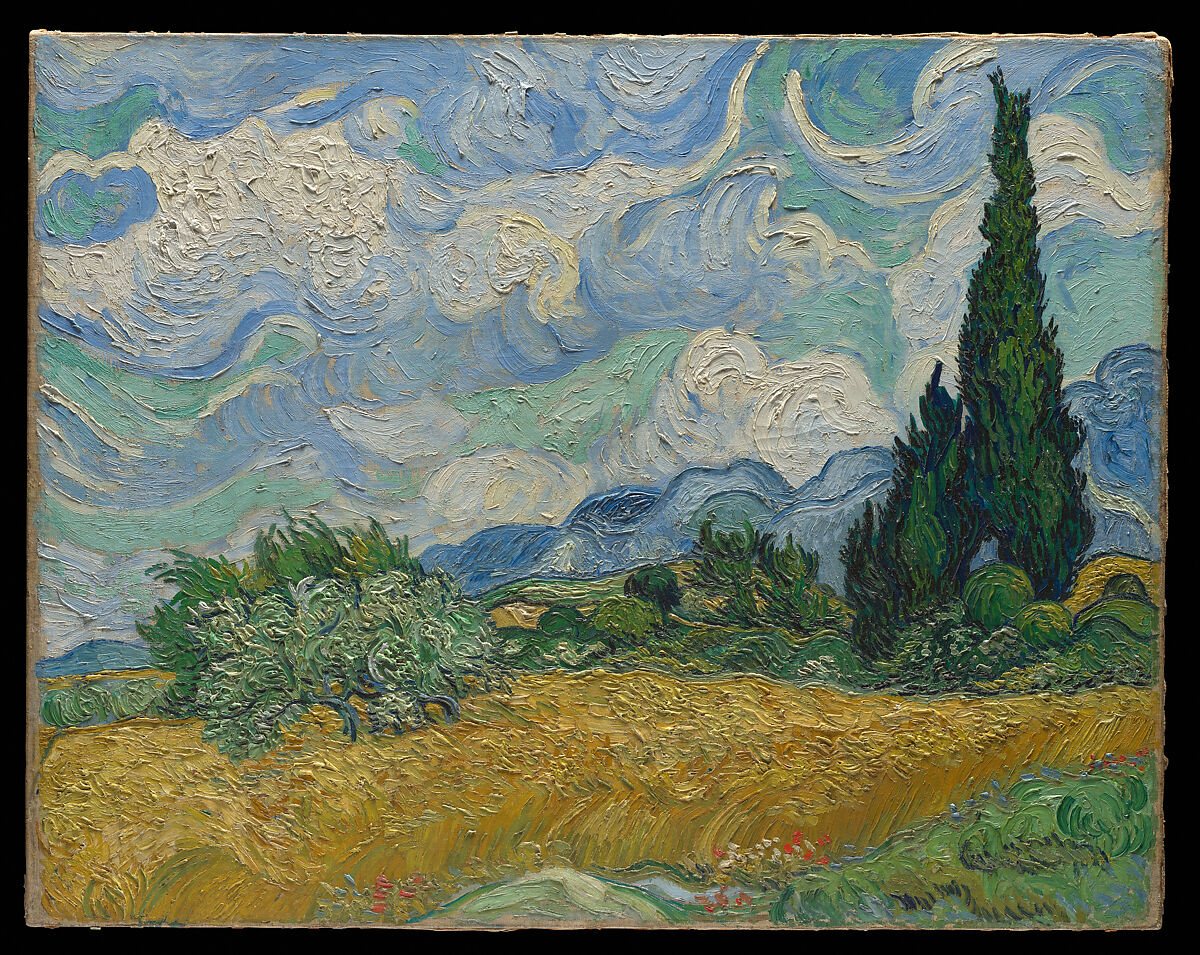
Image: public domain, courtesy of The Metropolitan Museum of Art, New York
Wheat Field with Cypresses
Van Gogh painted this view outdoors in the summer of 1889 and thought it was one of his best landscapes. He compared the tall dark cypresses to an Egyptian obelisk, and the thick paint seems to move in the wind.
🎧 Audio guide available in the 3D museum
Did you know?
- He painted it near Saint-Rémy, after deciding in late June 1889 to make a series about the cypresses.
- On 2 July 1889 he sent his brother Theo drawings of this view, made with a reed pen.
- He called the cypresses a splash of black in a sunny landscape.
- He said the sky looked like a piece of Scotch plaid, the checked cloth used for kilts.
- That September he painted two more versions indoors: one is in London, and a smaller one he gave to his mother and sister.
- The Met bought it in 1993 with a gift from the Annenberg Foundation.
About the artist
Vincent van Gogh (1853–1890) was born in the Netherlands and worked there, in Paris, in the south of France at Arles and Saint-Rémy, and finally at Auvers-sur-Oise.
In only about ten years as an artist he created hundreds of vibrant paintings, among them Sunflowers, The Starry Night, Irises and The Bedroom.
He wrote more than 800 letters, most of them to his beloved brother Theo, full of warmth and of his joy in color and nature.
More works
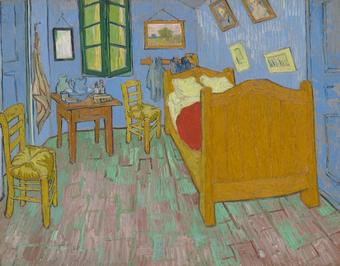 The Bedroom
Vincent van Gogh, 1889
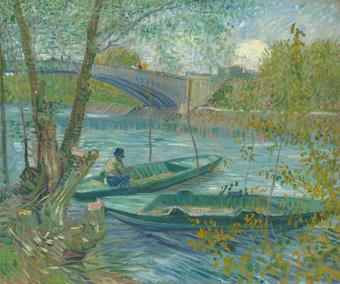 Fishing in Spring, the Pont de Clichy (Asnières)
Vincent van Gogh, 1887
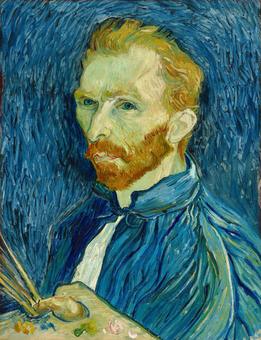 Self-Portrait
Vincent van Gogh, 1889
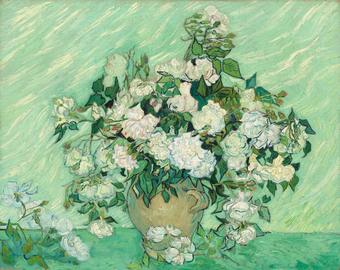 Roses
Vincent van Gogh, 1890
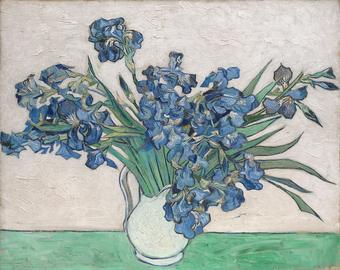 Irises
Vincent van Gogh, 1890
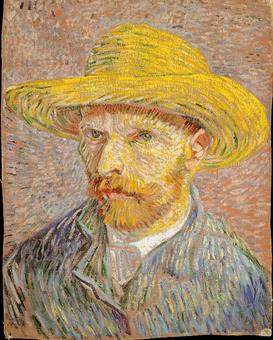 Self-Portrait with a Straw Hat
Vincent van Gogh, 1887
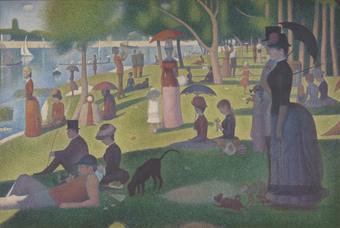 A Sunday on La Grande Jatte
Georges Seurat, 1884–86
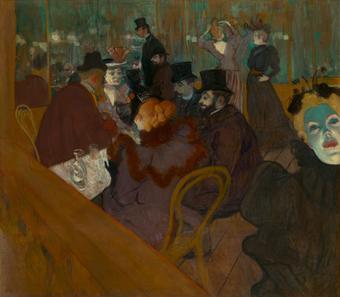 At the Moulin Rouge
Henri de Toulouse-Lautrec, 1892–95
The museum is free for everyone. If you enjoy it, you can help us add new paintings and audio guides.
Secure payment via PayPal · any amount